For nearly three years, the stretch of land known as Walt Disney World was the epicenter of the most high-profile political and legal battle in modern American history. It was a saga filled with “war rooms,” retaliatory legislation, and a governor-versus-mouse showdown that dominated headlines. But as we move through February 2026, a sound long-time Disney observers have replaced the fire and brimstone haven't heard in years: the rapid, rhythmic strike of a rubber stamp hitting construction permits.

According to recent reports regarding the Central Florida Tourism Oversight District (CFTOD)—the state-appointed body that replaced the Disney-controlled Reedy Creek Improvement District—the era of obstructionism is officially dead. What was once a board designed to rein in the “Corporate Kingdom” has transformed back into a streamlined administrative machine, facilitating Disney’s massive $17 billion expansion with a speed that looks suspiciously like “business as usual.”
From Battleground to Boardroom: The Great Reset
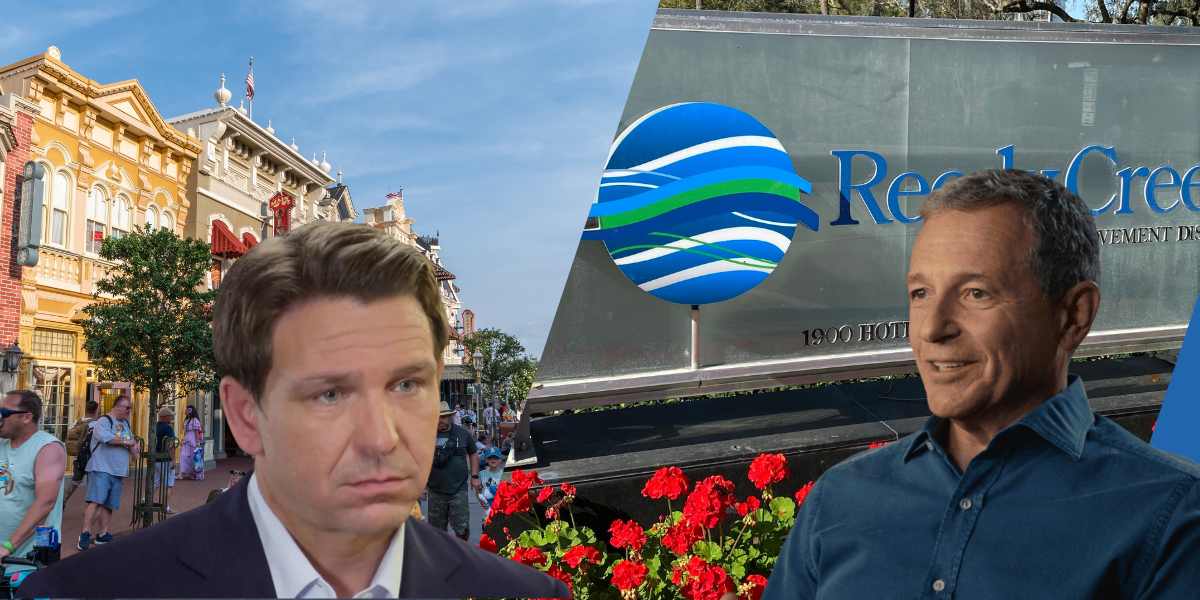
To understand how we reached this “peace in our time,” we have to look at the wreckage of 2023. At the height of the feud between Florida Governor Ron DeSantis and The Walt Disney Company, the CFTOD board was essentially a political war council. Meetings were televised spectacles where board members threatened to build state prisons on Disney’s borders and questioned the very existence of the resort’s land-use agreements.

However, the “Great Reset” began in earnest in mid-2024 with a series of legal settlements. Fast forward to January and February 2026, and the final “retaliation-era” board members have officially stepped down. In their place are members who appear focused on the “un-sexy” side of government: infrastructure, bonds, and utility requests.
The reason for the shift is simple: Economic Gravity. Florida needs Disney’s tax revenue and job creation, and Disney needs a functional regulatory environment to execute its “Turbocharge” expansion strategy.
The $17 Billion “Green Light”
The latest reports from the CFTOD show a significant shift in how construction projects are being handled. As first highlighted by BlogMickey, the district is now moving through complex construction approvals with almost zero friction.
Just this month, the board unanimously approved an initial $6.75 million budget for a massive electrical system expansion in the “North Service Area.” While the documents don't name specific rides, the power load and location match the two most significant projects in Magic Kingdom history: Villains Land and the Cars-themed Frontierland expansion.
Other recent “rubber-stamp” approvals include:
- The “Beyond Big Thunder” Infrastructure: Site prep and land grading for roughly 33 acres of forest and wetlands.
- Tropical Americas at Animal Kingdom: Moving forward with permits for the demolition of DinoLand U.S.A. to make way for Indiana Jones and Encanto.
- Monsters, Inc. Land at Hollywood Studios: Expanding energy plants and chilled water lines to support the massive power requirements of the “Door Coaster” ride system.
Why the District is Playing Ball
Critics of the oversight transition once feared that a state-appointed board would “kill the magic” by blocking Disney’s creative ambition. So, why are they facilitating it now?

1. The $170 Million Bond “Spending Spree”
Late last year, the district successfully issued $170 million in bonds to support 22 infrastructure projects. Analysis shows that these projects are effectively designed exclusively to support Disney’s expansion. The board has already approved nearly $25 million worth of work in the past three months alone. The district isn't just “letting” Disney build; they are actively financing the groundwork.
2. The 15-Year Development Agreement
In 2024, Disney and the CFTOD signed a landmark development agreement that essentially codified the peace. Disney is committed to spending $17 billion in Florida over the next two decades. In exchange, the district provided the long-term certainty Disney’s board required. The CFTOD is now legally and economically incentivized to ensure these projects happen on time.
3. Professionalism Over Politics
The current board has pivoted toward a “pro-business” stance. While the district remains a state-appointed body, the day-to-day operations are handled by experts who understand that a stagnant Disney World is a disaster for the Central Florida economy. If Disney builds a “Fifth Gate” (which is now officially allowed under the 2045 Comprehensive Plan), the district's tax base grows exponentially.
What This Means for Theme Park Fans
For the average guest, the fact that the CFTOD has gone back to “business as usual” is the best news since the park reopened in 2020. When the district and Disney were at war, the threat of project cancellations was real.

Now, with the rubber stamp back in action, the timeline for Piston Peak National Park and Villains Land is more solid than ever. We are seeing permits for demolition and site preparation moving through the district’s approval process in weeks rather than months.
The “Mouse War” is over. The permits are flowing. And the rubber stamp is back in action.
Are you happy to see the Oversight District cooperating with Disney again, or do you miss the “watchdog” approach? Let us know your thoughts in the comments!