The legal pressure surrounding Disney's Disability Access Service has been building steadily since the program was overhauled in 2024, and this week it took a concrete step forward.

A discrimination complaint filed with the Florida Commission on Human Relations by a full-time power wheelchair user and longtime Disney Vacation Club member has advanced to the investigation phase after a mediation deadline passed without an agreement on March 18.
The development is notable for several reasons. It represents one of the more formally documented legal challenges to emerge from the DAS controversy, brought by a guest whose specific mobility needs put them in direct conflict with the alternatives Disney has offered when DAS is denied.
It arrived on the same day that Disney shareholders voted 95 to 5 against a proposal to independently investigate the program's risks. And it coincided with the first public comments from new CEO Josh D'Amaro on the subject, delivered at the Annual Meeting of Shareholders, which were careful, measured, and ultimately noncommittal on whether any changes are coming. Together, these three developments on a single day paint a precise picture of where the DAS situation stands right now, and why guests with disabilities planning Disney vacations are watching this story closely.
The Complaint: What Was Filed and What It Says

The complaint was filed with the Florida Commission on Human Relations on February 20, 2026. It carries case number FCHR No. 2026119734 and was brought by a guest who described themselves in a February 24 declaration as a full-time medically necessary power wheelchair user and a Disney Vacation Club member.
The core of the complaint is that the 2024 DAS changes, combined with the alternatives Disney offers when DAS is denied, have made safe park access impossible for their family. The declaration states: “Disney's operational changes to the Disability Access Service program and related transportation policies have materially impaired my family's ability to use that ownership interest safely and predictably.”
The alternatives Disney suggests when DAS is denied, including queue re-entry, return-time systems, and attempts to use the standard queue first, are the specific targets of the complaint. The guest described those alternatives as not just inadequate but physically dangerous for a guest in their situation: “So when Disney points to queue re-entry, return-time systems, or some version of ‘attempt the queue first' when DAS is denied, it's not offering my family a fallback. For a guest in a chair like mine, that alternative is physically impossible.”
The physical risk is described with specificity: “Once committed to certain queue geometries, I can become physically locked in.” The guest characterized what Disney frames as flexibility as something that functions as “a risk multiplier” in practice, not an accommodation. The filing notes that the guest pursued the formal process deliberately: “I used the process. I documented. I preserved evidence.”
Mediation did not occur before the March 18 deadline, and the case has proceeded to investigation.
The Shareholder Vote That Happened the Same Day
On March 18, Disney shareholders voted on Proposal 7, formally titled “Review and Report on Disability Inclusion and Accessibility,” introduced by shareholder Erik Paul. The proposal asked Disney Parks to hire an independent third party to evaluate its disability access policies from legal, financial, reputational, and enterprise risk perspectives and share the findings with shareholders. It did not require Disney to make any operational changes. It asked only for transparency about the risks of the changes already made.
Five percent of shareholders voted to approve the proposal. The remaining 95 percent voted against it.
The result, alongside the FCHR investigation's advancement, creates an interesting juxtaposition. Disney's shareholders declined to require even a risk assessment of the program changes on the same day the state of Florida formally opened an investigation into one of those changes.
D'Amaro's Comments at the Annual Meeting
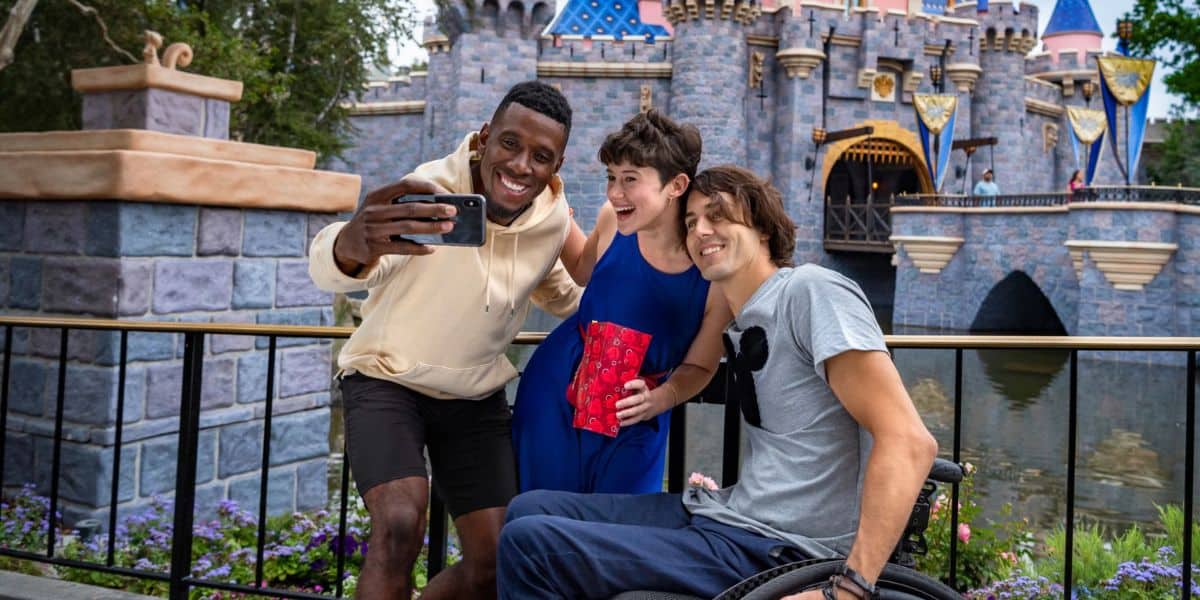
New CEO Josh D'Amaro was asked at the March 18 Annual Meeting whether Disney would consider restructuring DAS to ensure it serves everyone who needs it. His response was careful and did not commit to a yes or a no.
D'Amaro said: “Accessibility is deeply personal and for many families, our services for guests with disabilities, they make it possible to enjoy our parks together.” He described the current program as the result of “extensive work that we've done with accessibility experts and medical professionals, all in an effort to better understand individual needs and then really thoughtfully match guests with the right levels of support.” He emphasized the individualized nature of the current approach: “It's important to us that we have individual conversations with families, and that we have a broad range of accommodations that our cast members can recommend through these individual conversations.”
On the question of future change, D'Amaro said: “As we look ahead, as we always do, we'll continue to listen, we'll learn and apply expert guidance as we evaluate these accommodations over time, and we'll always be focused on providing great experiences and designing these services to support our guests.”
It is worth noting that D'Amaro was serving as Chairperson of Disney Experiences when the 2024 DAS changes were implemented. The program he was defending at the Annual Meeting is the program he oversaw the creation of.
The 2024 Changes That Started This
Disney updated its DAS eligibility in 2024 to cover guests with a developmental disability like autism or similar who are “unable to wait in a conventional queue for an extended period of time.” The language effectively removed many guests with physical disabilities from eligibility. Reports emerged of cast members advising denied guests to practice waiting in line at home, to rent mobility equipment, or to re-enter queues by finding a party member already waiting.
Disney has made some adjustments since the rollout, including extending the validity period of approved accommodations and adding information about the required video call process. The core eligibility language has not changed.
What Guests With Disabilities Should Know
The FCHR investigation is a formal legal process that will examine the complaint on its merits. It is separate from a class-action lawsuit filed by a Disneyland Resort guest in 2025, which is also ongoing. Neither proceeding has changed the current DAS eligibility requirements. Guests visiting Walt Disney World or Disneyland today are navigating the same program that existed before either legal action began.
For guests who do not qualify under current DAS criteria but need accommodation to navigate the parks, the individual conversation D'Amaro referenced at the Annual Meeting is the most actionable path currently available. Contacting Disney's accessibility services before your visit and describing your specific needs in detail gives cast members the information they need to recommend available accommodations beyond DAS.
We will continue following the FCHR investigation and any related DAS developments. Our Disney accessibility guide covers the current state of the program, what accommodations exist beyond DAS, and how to approach the individual conversation process before your visit. Check it before your trip and go in with as much information as possible.