
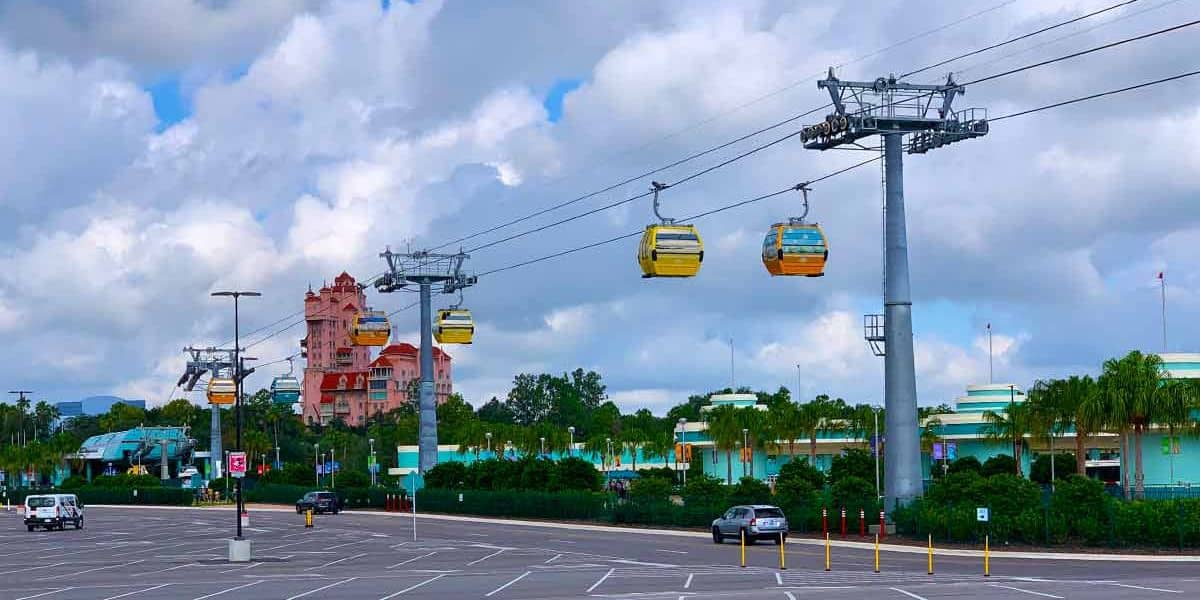
When the Disney Skyliner took to the air in late 2019, it transformed how guests move across Walt Disney World. The continuous-loading gondolas turned transit into an attraction in its own right, quietly ferrying thousands between EPCOT, Disney’s Hollywood Studios, and several key resort properties while bypassing bus queues and roadway bottlenecks.

Given its overwhelming popularity and operational efficiency, parkgoers have spent years wondering where the aerial network would expand next.
While public announcements from Disney Experiences tend to spotlight new lands and headline rides, the true roadmap for the resort’s future is almost always found in civil engineering permits, roadway overhauls, and municipal infrastructure work. A massive construction project moving forward along Western Way indicates that Disney and local infrastructure planners have already begun laying the literal groundwork for the Skyliner’s next big leap.
The Western Way Project: Untangling a Critical Junction
To see how asphalt and overpasses point directly to gondola towers in the sky, you have to examine the civil engineering overhaul currently unfolding on the western edge of the resort.

Under the Central Florida Tourism Oversight District, Disney has advanced a major multi-million-dollar infrastructure initiative focused on the congested intersection of Western Way and Buena Vista Drive:
- Highway Widening: Expanding a 2.5-mile stretch of Western Way from four lanes to six lanes, creating three travel lanes in each direction from State Road 429 straight past Disney’s Coronado Springs Resort to Buena Vista Drive.
- The Grade-Separated Interchange: Constructing a full highway overpass that elevates Buena Vista Drive cleanly over Western Way, eliminating the surface-level traffic light that frequently snarls guest traffic moving toward Disney’s Animal Kingdom and the Flamingo Crossings gateway.
While expanding highway lanes addresses growing regional traffic, large-scale grade separations and major arterial shifts within Disney property are rarely built solely for commuters. Historically, such capital-intensive civil projects have served as essential preliminary work for new resort hotels and dedicated guest transportation routes.
Connecting the Path: Coronado Springs, Blizzard Beach, and a New Resort
The Western Way corridor contains one of the largest parcels of developable land left on Disney property.
In the past, unlocking this land was hindered by poor road layouts, traffic friction, and wetland buffers. By separating Buena Vista Drive and Western Way into an elevated interchange, civil engineers have removed the logistical logjam, creating a shovel-ready footprint for a brand-new resort hotel along this western axis.
This future development provides the exact justification needed to extend the Skyliner.
Currently, the Skyliner radiates from Caribbean Beach Resort to Hollywood Studios, EPCOT, and nearby value and moderate resorts. Extending northward toward Magic Kingdom or westward into Animal Kingdom has always been deemed impractical due to animal welfare concerns, environmental preserves, and monorail clearance issues.

The western corridor, however, provides a clear, obstacle-free path.
A brand-new western branch could originate at Disney’s Hollywood Studios and run parallel to the newly widened Buena Vista Drive and Western Way rights-of-way. Along this single path, the line could connect:
- Disney’s Blizzard Beach Water Park and Winter Summerland Miniature Golf
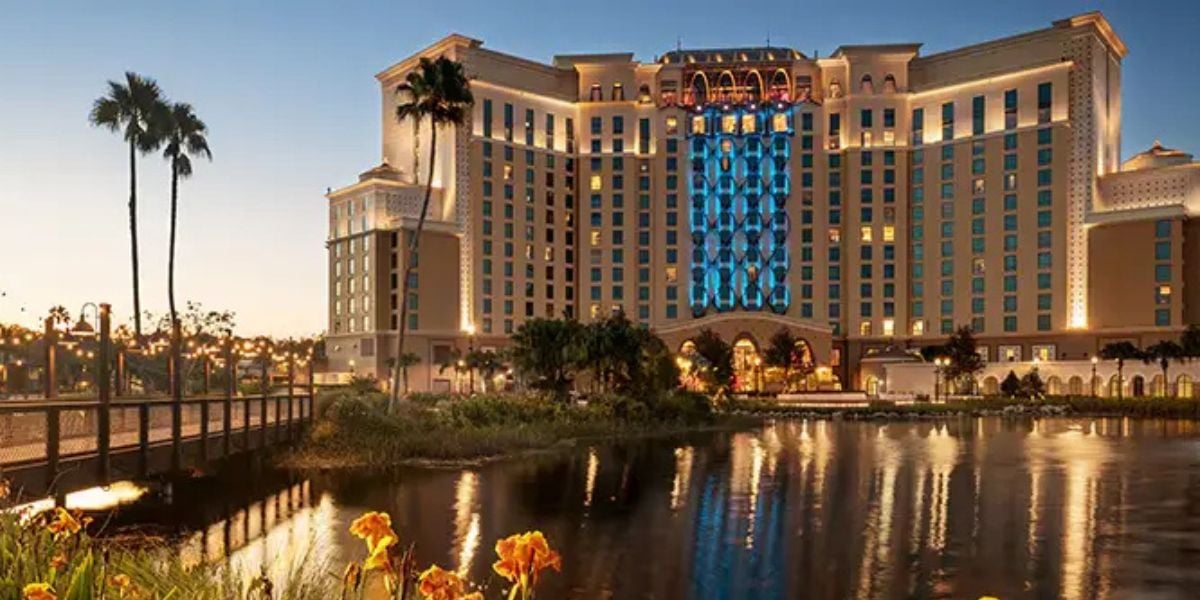
- Disney’s Coronado Springs Resort and the towering Gran Destino Tower
- The proposed new hotel site along Western Way

By aligning utility lines, retention ponds, and bridge clearances while the road is actively torn up, Disney preserves the precise right-of-way required to install future gondola support towers without disrupting fresh pavement later.
Why Gondola Transit Wins Every Time
From an operational and financial standpoint, expanding the Skyliner is an obvious choice:
- Premium Pricing Power: Resorts on the Skyliner line consistently command higher room rates than properties relying entirely on standard bus service.
- Lower Construction and Operating Costs: Cableway transit systems are far more cost-effective to construct and operate per mile than monorails, while eliminating the labor, fuel, and vehicle maintenance costs associated with diesel buses.
- Guest Satisfaction: Fast, continuous boarding eliminates bus depot crowding, creating a premium guest arrival experience that pays dividends across vacation surveys.
Reading the Groundwork
Disney rarely announces utility easements or structural clearances in advance; the company prefers to announce hotel concepts and transit lines only after the civil prep work is firmly in place.

The extensive widening and elevated interchange at Western Way reveal that the western gateway is being prepared for major, long-term expansion. The physical corridor is falling into place, meaning the foundation for the Skyliner’s next journey is already being built beneath our feet.