Disney parks are full of details that most guests absorb without consciously registering them. The ambient music that shifts as you walk from one land to the next.
The specific temperature of the air inside an attraction queue on a summer day. The smell of a particular environment that locks into memory so completely that encountering it years later in a completely different context stops you cold.
That last category is what reporter Alicia Stella tapped into when she made an observation on X that has been circulating among Disney fans who know exactly which scent she is talking about. The DINOSAUR attraction at Disney's Animal Kingdom closed in 2026 after more than two decades, taking with it a very specific themed clover scent that had become part of the experience for repeat riders. That scent did not disappear when the attraction did.
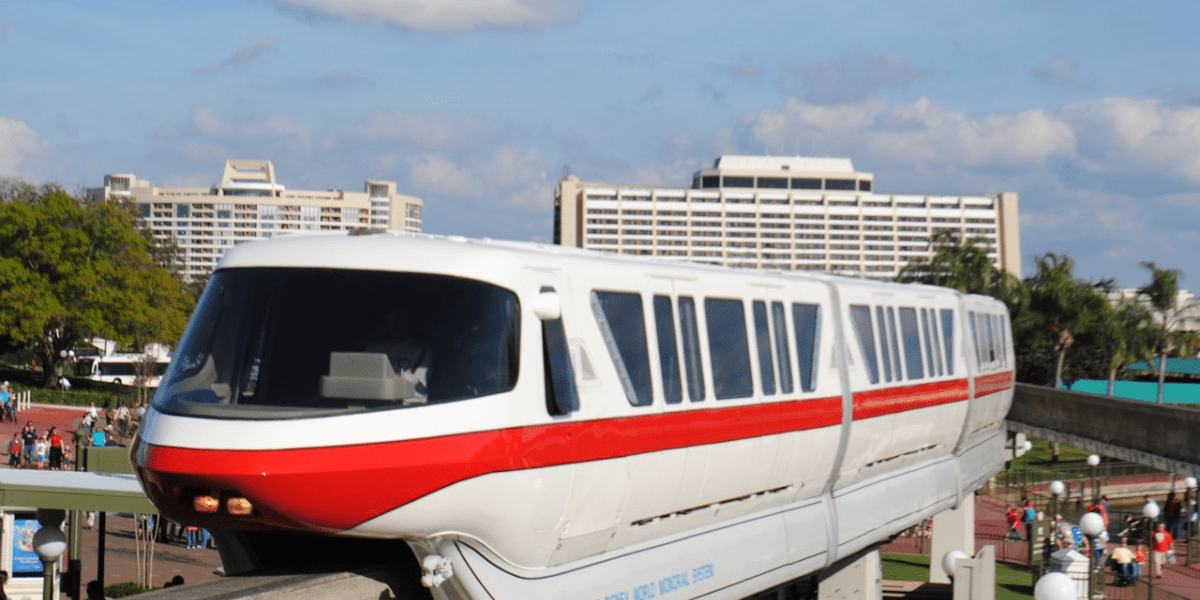
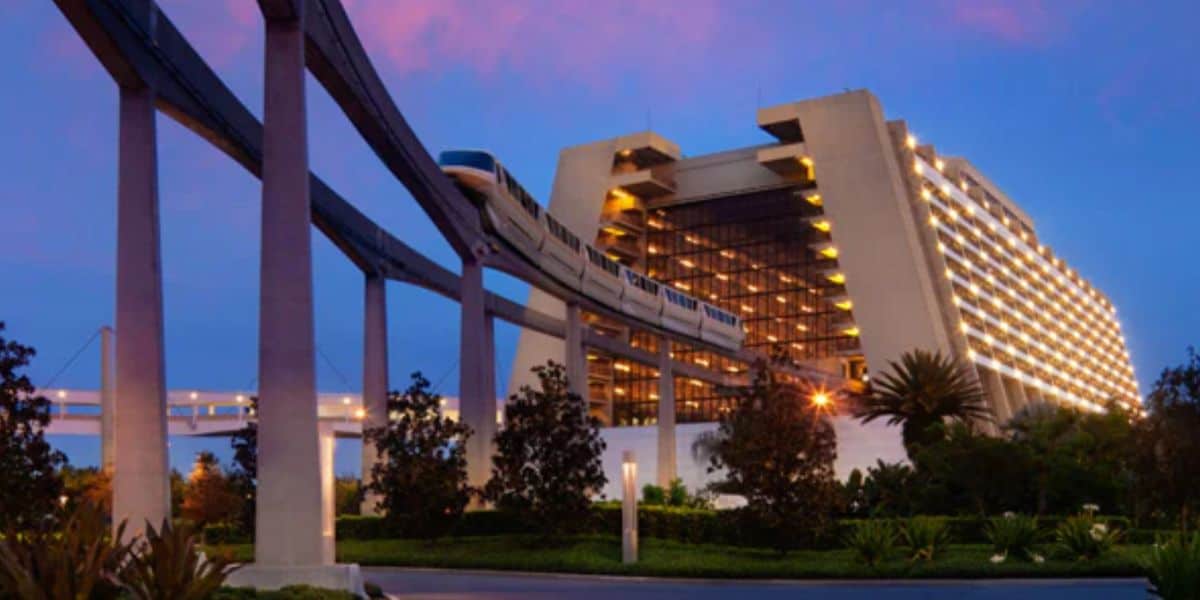
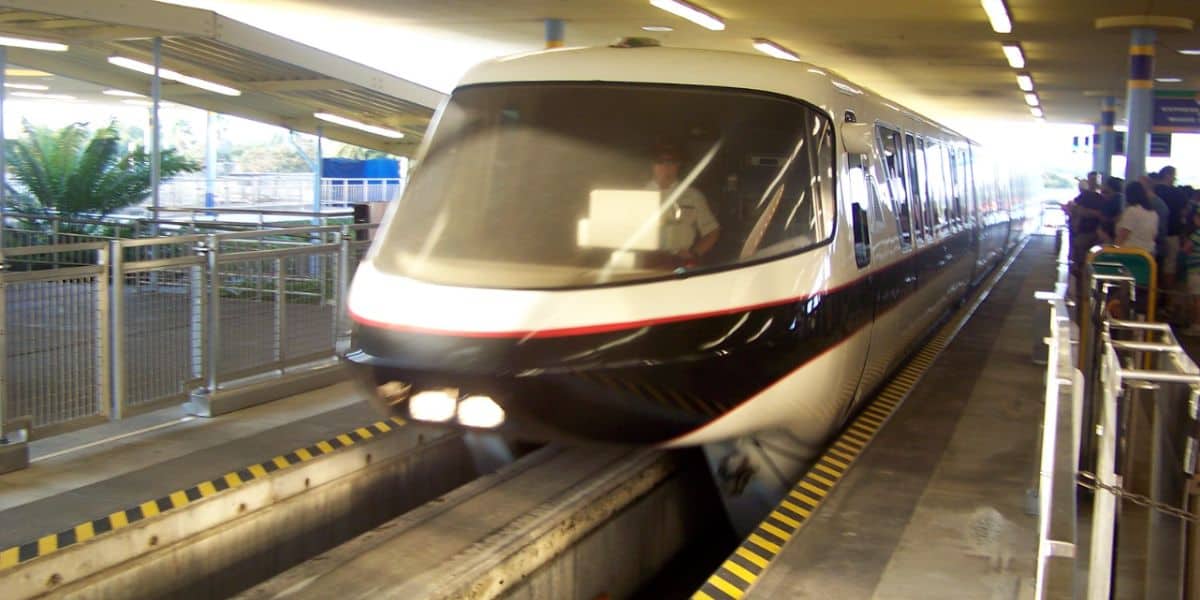
According to Stella, it has been repurposed and is now being pumped into the Walt Disney World Monorail cabins. Guests who have ridden the monorail recently and caught a familiar note in the air now have an explanation. And for guests tracking the broader story of what is happening with the monorail system itself, the scent detail is the lighter part of a heavier conversation.
The Scent Observation and What Followed
Alicia Stella posted on X: “Not enough people are talking about how the monorails smell like the Dinosaur ride, since they now pump in the scent they used to in the queue. It's the same clover scent. In use at some of the hotels too I think.”
Not enough people are talking about how the monorails smell like the Dinosaur ride, since they now pump in the scent they used to in the queue. pic.twitter.com/bdiOuxcXmF
— Alicia Stella (@AliciaStella) April 12, 2026
For guests with a history on DINOSAUR, the connection is immediate. The queue for that attraction had a deliberate ambient scent profile that was specific enough to become part of the ride's identity for frequent visitors. Disney's use of scenting across its properties is intentional and detailed, and repurposing a retired attraction's scent for the monorail rather than letting it disappear is a quiet but genuinely interesting continuity decision.
The replies to Stella's post offered a range of reactions that tell their own story about how differently guests experience the same cabin. One commenter offered a competing theory: “It's the hydraulics smell haha.” Another noted a personal experience with the scent's intensity: “Migraine sufferer here, I definitely noticed it yesterday on all monorails. However, it was not super strong and did not induce the panic many places do. Epcot Italy I can never shop there. The poison perfume flows out the doors.” A third went somewhere more philosophical: “I thought that was the burnt rubber smell, which strangely still brings me peace.”
The practical result of these responses is that what Stella identified as a deliberate clover scent carries a very different set of associations for different guests, ranging from nostalgic Disney memory to mechanical smell to, for at least one person, a migraine-adjacent experience they are glad was manageable. That range is itself a fairly accurate portrait of how scenting programs work in practice: the intent is one thing, and the reception is genuinely varied.
The Monorail's More Serious Recent History

In April 2026, Monorail Teal experienced a complete power failure on the EPCOT beam while carrying a full load of guests toward the Transportation and Ticket Center. The outage knocked out not just the train's propulsion but its air conditioning system. The Mark VI monorail cabins are sealed environments, and without air conditioning in Florida's April heat, conditions inside deteriorated rapidly. Reporting from BlogMickey documented what followed: guests used emergency window release tools to pop out the sealed windows, leaning out of the empty frames for air while others tended to children reportedly on the verge of heat exhaustion. The footage circulated widely and produced an image that was almost impossible to reconcile with the Disney transportation experience as it is supposed to look.
Disney confirmed that guests were evacuated via a tow-train and ladder trucks from the Central Florida Tourism Oversight District Fire Department, and stated in its official response that “all safety protocols were followed.” For guests who were inside the sweltering cabins during the incident, that framing and their experience of it were two different things.
The Teal incident came after a significant event in November 2025, when a fire at the Transportation and Ticket Center monorail area prompted a full evacuation of the TTC. Smoke poured from the beam and an adjacent train. The fire was attributed to electrical faults within the aging beam infrastructure. The April 2026 power failure involved the same electrical system.
What the Fleet's Age Actually Means
The Walt Disney World Monorail runs on Mark VI trains manufactured by Bombardier that began service in 1989. In 2026, those trains are approximately 37 years into operation. The standard service lifespan for high-capacity transit vehicles runs between 20 and 30 years. The current fleet is operating significantly beyond that range with no announced replacement plan.
Replacing the full twelve-train fleet would cost an estimated hundreds of millions of dollars, and new trains would likely require parallel upgrades to beams, power stations, and maintenance infrastructure. Disney has invested instead in expanding the Disney Skyliner gondola network, which has grown into a meaningful transit option for several resort areas. The Skyliner, however, does not serve Magic Kingdom or the EPCOT-to-TTC route, which remains the highest-traffic monorail corridor on the property. The monorail is not optional infrastructure. It is essential, and it is aging without a publicized replacement timeline.
Separately, the Disneyland Resort Monorail entered an indefinite refurbishment closure in March 2026 for electrical system updates and structural reinforcement of support pillars, with no confirmed reopening date announced.
How to Think About This for Your Visit
The monorail remains operational and continues to be one of the more pleasant ways to move between Magic Kingdom, EPCOT, and the resort hotels on that loop. The recent incidents are significant and documented, but they have not taken the system offline entirely. Guests who are traveling with young children or elderly family members, or who are sensitive to heat, may want to treat the monorail as a preferred option when conditions are comfortable and have a backup plan on days when Florida heat is particularly intense.
Disney buses and, depending on your destination, the Skyliner provide alternate routes that avoid the sealed monorail cabin entirely. Building awareness of those alternatives into your resort transportation planning is reasonable given the current reliability picture.
And if you ride the monorail on your next visit, pay attention to what you smell in the cabin. If it registers as something familiar from a Disney's Animal Kingdom attraction that no longer exists, you now know what you are smelling and why it is there.
We are following the monorail situation and will update if Disney makes any announcements regarding the fleet, the electrical infrastructure, or a replacement program. Our Walt Disney World transportation guide covers all current options and any active service updates. Check it before your trip and build a transportation plan that works for your group regardless of what the monorail system is doing on your specific dates.