
The “Happiest Place on Earth” is once again at the center of a public health firestorm. On February 7, 2026, the Orange County Health Care Agency (OCHCA) confirmed an additional case of measles exposure at the Disneyland Resort, marking the second high-profile alert in as many weeks. For the thousands of families who visited the Anaheim parks in late January and early February, the magic has been replaced by a tense waiting game.

As health officials scramble to contact-trace visitors across multiple states and international borders, the incident highlights a chilling reality: Disneyland’s unique environment—a mix of high-density crowds and shared indoor spaces—is a “superspreader” playground for one of the most resilient viruses on Earth.
The Science of a “Ghost” Virus
To understand why a single case of measles at Disneyland is cause for a regional health alert, you have to understand the terrifying efficiency of the virus. Measles is not spread like the flu or a common cold; it is truly airborne.
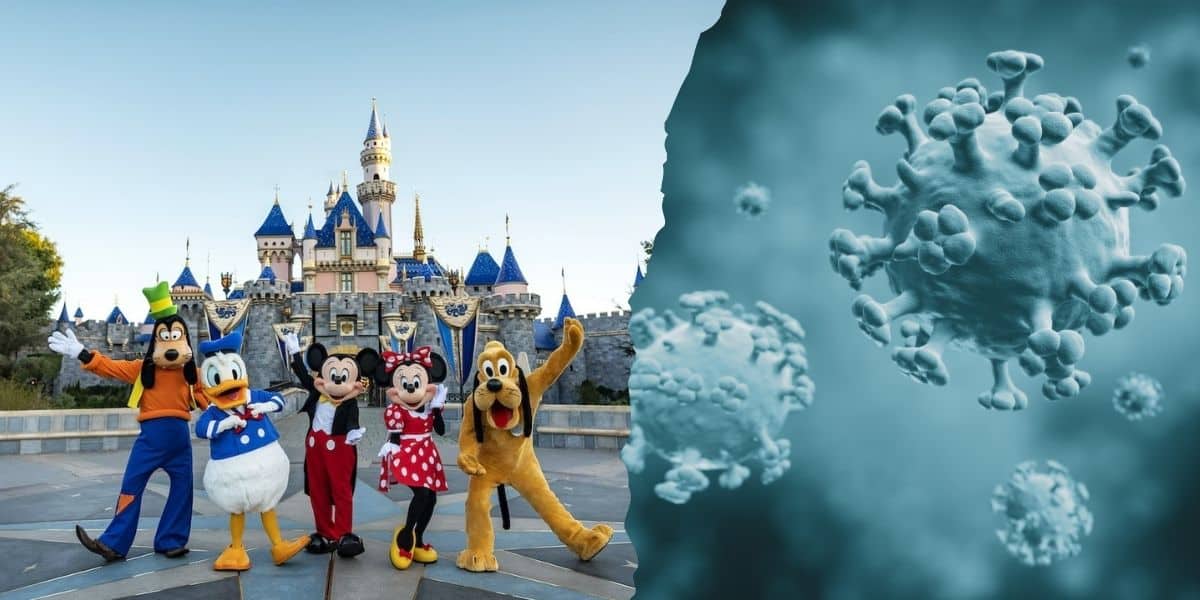
When an infected person breathes, speaks, coughs, or sneezes, they release microscopic droplets into the air. While most viruses fall to the ground within seconds, the measles virus is buoyant. It can hang suspended in the air for up to two hours.
In a theme park setting, this creates a “ghost” transmission effect. If an infected guest walks through the indoor queue of Pirates of the Caribbean or visits the Golden Horseshoe for a show, the virus remains active in that space long after they have moved on. You could walk into a gift shop sixty minutes after an infected individual has left and still inhale the live virus.
With a transmission rate so high that one infected person typically spreads it to 12 to 18 unvaccinated people, a single guest in a park as busy as Disneyland can trigger an exponential surge in cases.
The 10-Day Countdown: Symptoms to Watch For
If you were at the Disneyland Resort during the exposure window identified by the OCHCA, you are now in the “observation phase.” Measles has a long incubation period—typically 10 to 14 days—meaning you might feel perfectly fine for nearly two weeks before the illness strikes. Anyone who visited Disneyland Park on Thursday, January 22, from 8 a.m. to 4 p.m., and Disney California Adventure Park from 3 p.m. until closing is at risk.

The Prodromal Phase (Early Signs):
- High Fever: Often spiking above 104°F.
- The “Three Cs”: A persistent cough, coryza (runny nose), and conjunctivitis (inflamed, red, and watery eyes).
- Koplik Spots: Tiny white spots that appear on the inner lining of the cheeks a few days before the rash.
The Appearance of the Rash: The signature measles rash usually begins at the hairline and forehead, slowly moving down the neck to the trunk, arms, and legs. These spots are flat and red, often joining together as the virus progresses. It is important to note that a person is contagious for four days before the rash appears, meaning an infected guest at Disneyland likely had no idea they were a walking biohazard.
The Resurgence: Why Is This Happening in 2026?
Measles was declared “eliminated” in the United States in the year 2000. The fact that we are seeing a resurgence in 2026 is directly due to lower vaccination rates.

To maintain “herd immunity” against a virus as aggressive as measles, a community needs a 95% vaccination rate. In recent years, that number has begun to slip. A combination of post-pandemic “vaccine fatigue,” misinformation regarding the MMR (Measles, Mumps, and Rubella) vaccine, and an increase in personal belief exemptions has created dangerous pockets of vulnerability.
When an unvaccinated individual travels to a global hub like Disneyland, they are stepping into a “melting pot” of immunity levels. If the park’s overall “herd” falls below that 95% threshold, the virus finds its path of least resistance. The 2026 exposure is a stark reminder that public health is only as strong as its weakest link.
What to Do if You Were Exposed
If you suspect you were exposed during the February 2026 window, the most important rule is: Call, don't crawl.

- Do not go directly to a doctor’s office. If you show up in a waiting room with measles, you could infect every other patient there. Call your healthcare provider or local health department first. They will often arrange for you to be seen in an isolation area or after hours.
- Verify Your Immunity: If you have received two doses of the MMR vaccine, your protection rate is roughly 97%. You are likely safe. However, infants under 12 months (who are too young for the shot) and the immunocompromised are at severe risk.
- Isolate if Unvaccinated: If you are not vaccinated and were in the exposure zone, you may be asked to quarantine for 21 days to ensure you don't spark a new chain of transmission.
Conclusion
Disneyland is a place where we go to leave the “real world” behind, but the current measles alert proves that some realities cannot be escaped. As OCHCA continues to monitor the situation, the “Happiest Place on Earth” serves as a high-profile reminder that our collective health relies on the scientific shields we’ve spent decades building.
Were you in the parks during the exposure dates? Visit the OCHCA official site for the complete list of times and locations.