In a landslide victory for corporate management and its current philanthropic direction, The Walt Disney Company has decisively defeated a shareholder proposal aimed at reshaping its charitable giving. At the 2026 annual shareholder meeting, an overwhelming 99% of investors voted down a measure that sought to force transparency—and ultimately funding—toward conservative organizations like Turning Point USA (TPUSA).

The defeat marks a significant blow to the “anti-woke” activist movement that has targeted Disney for years. While the proposal was framed as a call for neutrality, the market’s response was deafening: Disney’s shareholders aren't interested in changing the company’s social impact playbook.
The Proposal: A Quest for “Political Neutrality”
The battle centered on a proposal from Bowyer Research, a conservative-leaning investment firm led by Jerry Bowyer. Representing the firm at the meeting was Dana Tuggle, a self-described longtime shareholder and Disney fan who argued that the company’s philanthropy has become a tool for partisan social engineering.

The proposal specifically targeted Disney’s employee-matched donations program. Over the last decade, the “House of Mouse” has matched a staggering $113 million in employee contributions to various nonprofits. Bowyer Research argued that this program lacks transparency and employs “arbitrary standards” that favor progressive causes while excluding conservative ones.
“Disney’s gift match policy should be politically and socially neutral,” Tuggle stated during the meeting. “They shouldn’t recommend or restrict charities based on their religion or viewpoint.”
The Turning Point USA Connection
The core of the conflict was Disney's perceived favoritism toward organizations like the Human Rights Campaign (HRC). Tuggle questioned why groups advocating for LGBTQ+ rights receive top-tier treatment while conservative organizations like Turning Point USA and the Family Research Council are subjected to “extra scrutiny” or excluded entirely from eligibility.
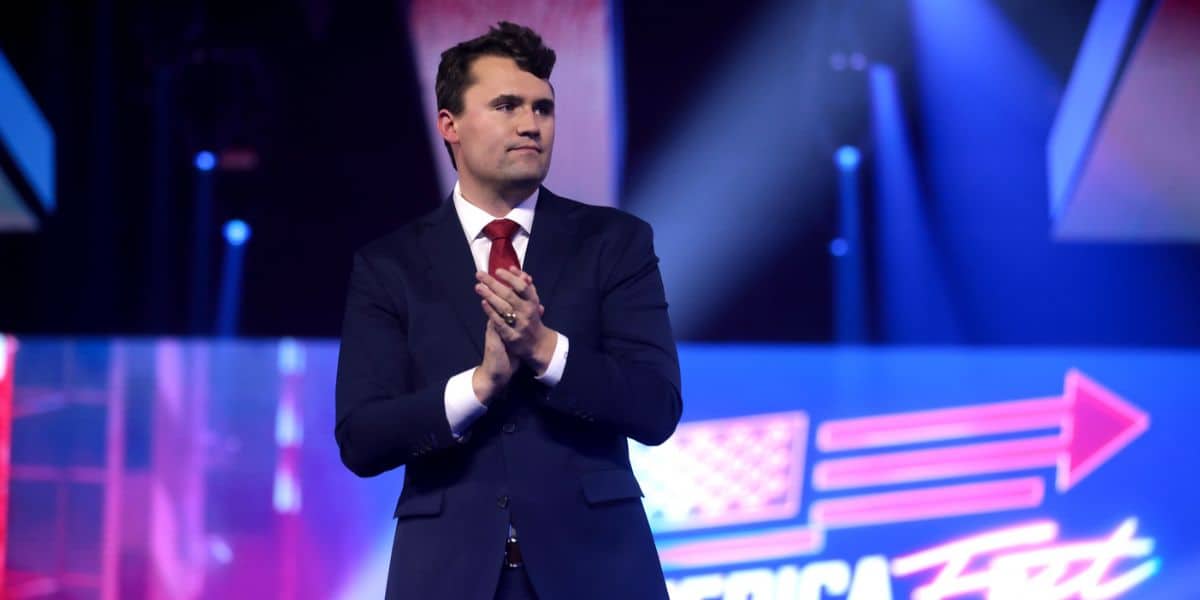
The proposal also accused Disney of neglecting homeschool support organizations, further fueling the narrative that the company’s corporate social responsibility (CSR) initiatives are out of touch with traditional family values.
For the proponents, the goal was simple: force Disney to report on its matching criteria, which they believed would expose a bias and eventually pave the way for mandatory funding of right-leaning groups like TPUSA.
Disney’s Defiant Response: “Materially False and Misleading”
Disney’s board of directors didn't just disagree with the proposal—they went on the offensive. In official company filings leading up to the vote, Disney urged shareholders to reject the measure, labeling it “materially false and misleading.”

Management argued that the proposal dealt with matters that were “not economically significant” to the company’s actual business operations. By framing the issue as a distraction rather than a fiduciary concern, Disney successfully pivoted the conversation back to its primary goal: entertainment and growth.
CEO Bob Iger has spent much of the last year trying to quiet the culture wars, famously stating that Disney should not be “agenda-driven.” However, this vote proves that while Iger may want to lower the political temperature, the company is not willing to let activist investors dictate which charities get a check.
The 1% Result: Why the “Anti-Woke” Coup Failed
When the final tallies were announced on Wednesday, March 18, 2026, the results were staggering. The Bowyer Research proposal received just 1% of shareholder support.

This massive rejection highlights a growing trend in corporate America: while culture war headlines dominate social media, institutional and retail investors are largely staying the course. For most Disney shareholders, the company’s $113 million in matching gifts is seen as a successful employee perk and a brand-builder, not a financial risk.
The failure of the proposal also reflects the difficulty conservative activists face in winning over major institutional investors like BlackRock or Vanguard, who typically follow the recommendations of proxy advisory firms. Despite Bowyer Research’s efforts to align with firms like Egan-Jones, the “anti-woke” narrative failed to gain traction where it mattered most: the ballot box.
The Future of Disney's Philanthropy
This victory provides Disney with a clear mandate to continue its current CSR strategies. The company remains a top-rated participant in the HRC’s Corporate Equality Index, a status it has maintained for years despite pressure from the right.

However, the battle is far from over. Organizations like Bowyer Research and the National Center for Public Policy Research (NCPPR) are increasingly sophisticated in how they use shareholder meetings as a platform. While they lost this round by a 99-to-1 margin, they have succeeded in keeping Disney at the center of the national conversation regarding corporate “wokeness.”
For now, the message from the 2026 annual meeting is clear: Disney belongs to its shareholders, and those shareholders are perfectly happy with the “Magic” exactly the way it is.