
The news hit the theme park community like a bolt of lightning from a Florida afternoon storm: the much-discussed, billion-dollar partnership between The Walt Disney Company and OpenAI has officially collapsed. What was once hailed as a revolutionary leap into “generative storytelling” via the Sora video platform is now a dead deal, following OpenAI’s sudden decision to discontinue the service in late March 2026.

With the deal off the table, Disney finds itself in a rare and enviable position. They have a massive, unallocated $1 billion capital pool—money that was already approved and earmarked for AI development—now sitting on the balance sheet, looking for a new home. As industry reporter Scott Gustin recently noted on X, this isn't just a corporate setback; it’s a massive opportunity to pivot back to the physical magic that fans have been begging for.
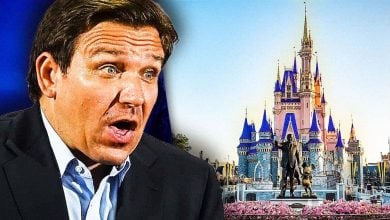
Under the newly minted leadership of Josh D’Amaro, who officially stepped into the CEO role this month, the message from the fanbase is loud and clear: take that billion dollars out of the “cloud” and put it into the concrete. Here is how the community thinks Disney should spend its newfound war chest.
1. The “Maintenance Mandate”: Fix the “Disco Yeti”
If there is one thing that unites Disney fans, it is an obsession with a 25-foot broken animatronic. For nearly two decades, the Yeti in Expedition Everest has been operating in “B-Mode”—shaking under a strobe light (the infamous “Disco Yeti”) — because the mountain's foundation couldn't support its massive movements.

In the wake of the OpenAI fallout, the Yeti has once again become the poster child for Disney’s maintenance backlog. Fans argue that $1 billion is more than enough to fund the complex structural surgery required to bring the Yeti back to “A-Mode,” as well as to refresh the aging effects on legacy rides like Pirates of the Caribbean and The Haunted Mansion.
The community is calling for a “Show Quality Surge”—a dedicated fund to ensure that every lightbulb, every fountain, and every animatronic across the four parks is operating at the “Disney Standard” that many feel has slipped in the post-pandemic era.
2. Accelerating the “Big Four”: Turning Dirt into Dreams
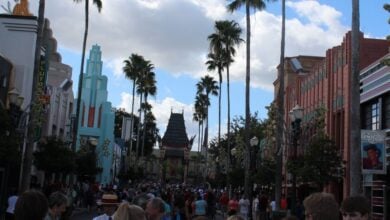
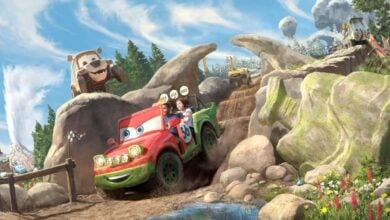
Disney has already laid out its most ambitious roadmap in a generation. We know Villains Land and Cars Land (featuring Piston Peak National Park) are coming to the “Beyond Big Thunder” area at Magic Kingdom. We know Monstropolis is set to bring a door-hanging suspended coaster to Hollywood Studios. And we know Tropical Americas (Pueblo Esperanza) is replacing DinoLand U.S.A. at Animal Kingdom with Encanto and Indiana Jones attractions.

However, “announced” and “open” are two very different things. Currently, many of these projects have timelines that stretch into the end of the decade. The fan demand for the $1 billion is simple: hit the turbo button.
- Villains & Cars (Magic Kingdom): Construction walls are already up, but fans fear these lands will be opened in tiny phases to stretch the budget. That $1 billion could ensure both lands open in 2028, rather than 2030, with their full complement of E-ticket attractions, immersive dining, and top-tier storytelling.
- Monstropolis (Hollywood Studios): Fans want that billion-dollar buffer to ensure the “Door Coaster” is as kinetically impressive as the concept art suggests, without cutting into the surrounding city's budget.
- Tropical Americas (Animal Kingdom): With Encanto already going vertical, fans want to ensure that the Indiana Jones retheme is a world-class overhaul that rivals the original Disneyland version.
3. Investing in “Real Intelligence”: The cast member Experience
In the high-stress environment of 2026, where wait times for Slinky Dog Dash and Tiana’s Bayou Adventure are regularly hitting 180 minutes, the front-line defense is the cast member. A large portion of the fanbase believes Disney should pivot from “Artificial Intelligence” to “Human Intelligence.”

The community is urging Disney to allocate a significant portion of that $1 billion to cast member wages, housing, and benefits. Since the opening of Flamingo Crossings Village, fans have noticed that while the facilities are nice, the “Disney Difference” in service is struggling under the weight of staffing shortages and high turnover.
By investing in the people who actually make the magic—rather than an algorithm—Disney ensures that the parks remain the premier vacation destination. A $1 billion “Human Excellence” fund could provide retention bonuses and a higher wage floor, making Disney the most desirable employer in Florida once again.
4. Bringing Back the “Magic” for Families
The economic reality of a Disney vacation in 2026 has become a significant point of friction. Between the high cost of the Lightning Lane Premier Pass and the “surge pricing” of meals, many families feel priced out.

Fans on social media have suggested that the OpenAI windfall could be used to subsidize the return of “Free Dining” promotions or to lower the price of skip-the-line services during peak seasons. The argument is simple: the best way to “improve the guest experience”—the stated goal of the original OpenAI deal—is to make the parks feel like a better value.
Conclusion: A Billion-Dollar Choice
Disney is at a crossroads. They can either look for the next tech trend to chase or listen to the thousands of fans standing in 3-hour lines who are begging them to fix the foundations and build the future.

The collapse of the OpenAI deal isn't a failure; it’s a reset. Under Josh D’Amaro’s new leadership, the company has a chance to prove that it still believes in the “Real World” of the parks. As the debate continues online, the message to Burbank is clearer than ever: the magic isn't found in the code—it’s in the concrete.
What would YOU do with $1 billion of Disney’s money? Fix the Yeti or build the Fifth Gate? Join the conversation in the comments!