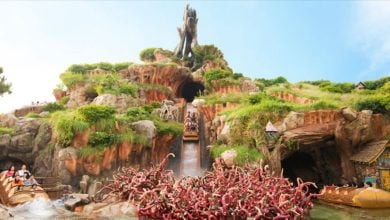

The Walt Disney Company is pulling off a dramatic corporate balancing act. Across its storied design campuses and executive suites, the entertainment titan is executing workforce cutbacks in celebrated physical divisions like Walt Disney Imagineering, while simultaneously deploying an estimated $180 million multi-year investment to recruit an elite artificial intelligence division.

The scale of Disney’s aggressive technology expansion was revealed in recent Delaware bankruptcy court filings and reported by Yahoo Finance and Bloomberg. Under a newly brokered arrangement, Disney is absorbing roughly 66 core researchers and machine learning engineers from the conversational AI startup Character.AI.
The recruitment blitz follows right on the heels of corporate restructuring in theme park design, highlighting a two-track strategy to keep the entertainment giant financially disciplined while building the software foundation for the next generation of storytelling.
Layoffs Strike Walt Disney Imagineering and Theme Park Teams
The splashy tech investment arrived as Disney implemented another round of workforce reductions across its physical creative divisions. On Wednesday, October 28, 2026, Disney initiated layoffs affecting between 100 and 200 employees across its Disney Experiences segment—the division responsible for domestic and international theme parks, resorts, consumer products, and Disney Cruise Line.
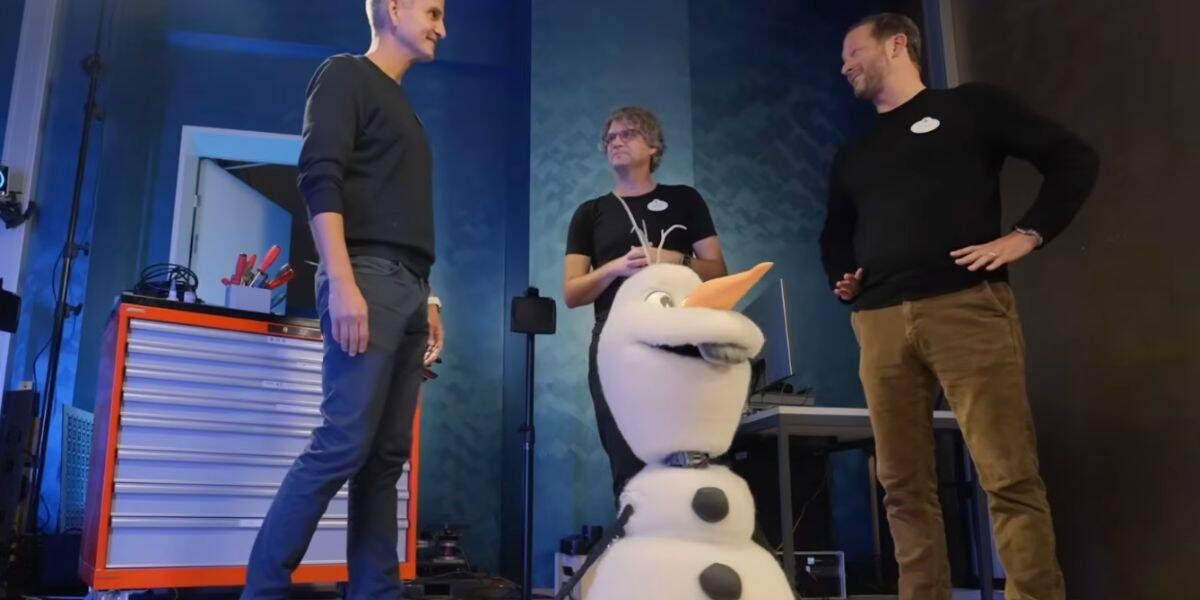
The cuts fell hardest on Walt Disney Imagineering (WDI)—the creative arm that designs and builds Disney’s rides and lands—as well as Disney Live Entertainment. The departures were concentrated primarily at Imagineering’s creative hub in Glendale, California, as well as in roles based in Orlando, Florida.
According to reporting from the Los Angeles Times, the staff reductions were prompted by an ongoing evaluation of project priorities, capital expenditures, and construction timelines. While Disney Experiences remains an economic juggernaut—generating $36.2 billion in revenue in fiscal 2025—the company has been managing departmental overhead as several major development cycles shift, including concept work for international portfolios and long-range domestic developments such as DisneylandForward in Anaheim.
Inside the $180M AI Recruitment Play
While design headcounts were adjusted to match physical project schedules, Disney seized an extraordinary opportunity in the tech labor market.

The talent pipeline opened through Chapter 11 bankruptcy proceedings involving Character.AI. Once valued at nearly $5 billion for its consumer platform that enabled users to hold open-ended conversations with fictional personas, the startup filed for bankruptcy under crushing computing costs and shifting legal pressures.
Rather than letting the company’s engineering roster scatter, Disney structured an aggressive talent absorption plan:
- Mass Technical Onboarding: Disney extended formal offers to at least 66 key employees, capturing the vast majority of Character.AI’s active engineering and machine-learning workforce.
- $180 Million Over Three Years: Court records show Disney budgeted approximately $60 million annually in combined compensation to bring on and retain the incoming technical cohort across three years.
- $30 Million Retention Safeguard: To prevent rival Silicon Valley giants from poaching the newly acquired researchers, Disney set aside a dedicated $30 million retention bonus pool, distributed at 12- and 24-month milestones.
- $20 Million Software Bid: Separate from employee compensation, Disney submitted a $20 million stalking-horse offer to secure perpetual, non-exclusive licenses to specific proprietary modeling tools and software assets from the bankrupt startup.
Karandeep Anand and the New Tech Mandate
The hiring initiative follows an executive restructuring that started at the top. In late September, Disney created the corporate role of enterprise-wide Chief Technology Officer and Senior Executive Vice President, appointing former Character.AI CEO Karandeep Anand to the post. Reporting directly to Disney leadership, Anand was charged with centralizing digital architecture across Disney Entertainment, ESPN, and Disney Experiences.

Bringing Anand aboard created an immediate runway for his technical bench to follow. In court disclosures, Character.AI noted that internal morale and the risk of a mass staff exodus threatened to dissolve the startup's remaining enterprise value, making Disney’s structured hiring package the most viable landing spot for the engineers.
For Disney, the group brings hard-to-find technical expertise in persona modeling—the niche branch of AI dedicated to generating natural dialogue that adheres strictly to complex characters, emotional tone, and narrative guardrails.
Two Distinct Paths: Disciplined Trimming and Targeted Growth
The juxtaposition of theme park layoffs alongside heavy AI hiring reflects an enterprise-wide reallocation of resources across two distinct tracks:

- Managing Cyclical Overhead: Theme park development is inherently project-based. As attraction concept phases conclude and build timelines shift, corporate headcounts in physical design are periodically realigned to safeguard operating margins.
- Funded Strategic Expansion: Software and synthetic intelligence represent high-leverage assets that can scale instantly across millions of consumer screens, theme park animatronics, and interactive video games without requiring proportional increases in physical footprint.
By keeping fixed physical development costs lean while capitalizing on rare market disruptions to secure premier machine-learning minds, Disney is positioning its storied intellectual property to thrive across both physical lands and digital worlds for decades to come.