

For decades, the health of the Walt Disney World and Disneyland resorts was measured by a simple metric: the turnstile. If the parks were packed and the wait times were astronomical, Disney was winning. But as the financial results for the second quarter of 2026 have just revealed, that old-school philosophy has been officially retired.

In a move that has stunned financial analysts and frustrated the traditional middle-class fan base, The Walt Disney Company has reported a record-breaking $9.49 billion in revenue for its “Experiences” division in Q2 2026. However, hidden beneath that staggering number is a detail that seems almost contradictory: attendance at the domestic parks is actually down.
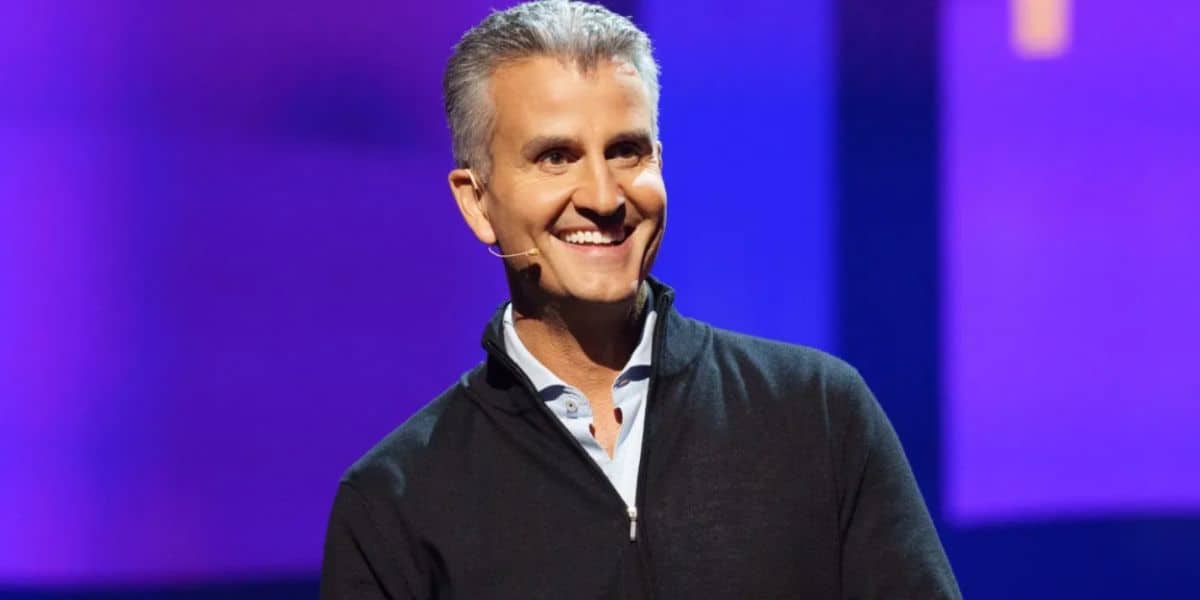
The message from the executive offices is now crystal clear: Disney doesn't need a “sea of people” to make a fortune. In fact, under the leadership of newly minted CEO Josh D’Amaro, the company has discovered it prefers a smaller, wealthier crowd that is willing to pay a premium for a “ghost town” experience.
The D’Amaro Strategy: Yield Over Volume
This quarter marks a significant milestone in Disney’s leadership. Josh D’Amaro, who has spent years overseeing the parks, has now brought his “yield-driven” strategy to the center of the company's entire business model. In the past, Disney tried to appeal to every demographic with a range of discounts to keep capacity at 100%.
Today, the goal is to keep the parks at a comfortable 70–80% capacity while ensuring that every guest who enters is a “high-value” spender.
The results speak for themselves. While domestic attendance dipped by 1% this quarter—largely due to continued softening in international visitation—the Experiences segment's revenue grew by 7%. By raising the “barrier to entry” through higher ticket prices and hotel rates, Disney is effectively using cost as a crowd-control measure. The result is a more profitable park experience that requires less staffing, maintenance, and infrastructure wear and tear.
The Record-High Cost of “Magic”
How exactly does a park with fewer people make more money? It comes down to a strategy of “premiumization.” In 2026, the base price of a Disney ticket is merely the starting point of a much larger financial commitment. Per capita guest spending at domestic parks rose by 5% this quarter, driven by three primary pillars:

1. The Mandatory “Luxury Tax”
With the retirement of free FastPass systems years ago, the Lightning Lane Multi Pass and Single Pass systems have become a standard part of the Disney budget. Guests are now conditioned to view these $25 to $40 daily add-ons as a mandatory tax on their vacation. Even with lower attendance, the “perceived” value of skipping a 45-minute wait remains high enough that guests are willing to pay to avoid wasting their limited time.
2. The Luxury Hotel Pivot
Disney has leaned heavily into its Deluxe resorts. While occupancy at Value resorts like All-Star Movies has fluctuated, the high-end “monorail loop” hotels—The Contemporary, Polynesian, and Grand Floridian—are seeing record revenue.
Disney has realized that a single guest staying in a $900-a-night suite is worth more to the bottom line than five guests staying off-property, and they are tailoring their perks (like Extended Evening Hours) to reward these “whale” spenders.

3. Food, Beverage, and Merchandise
The “Mickey Premium” has never been higher. From the $8.00 churro to the $250 custom-built lightsaber, Disney has mastered the art of “upselling” the experience. In Q2 2026, food and beverage revenue jumped significantly, driven largely by high-end, “Instagrammable” dining experiences catering to the luxury demographic.
The Streaming Safety Net: +88% Income Explosion
While the parks are the traditional cash cow, the Q2 2026 earnings report brought another massive win for the company: Streaming operating income has exploded by 88%.

For the first time since its inception, the combined streaming bundle (Disney+, Hulu, and ESPN+) is contributing massive black ink to the bottom line, reaching $582 million in operating income. This is a crucial piece of the “fewer, wealthier guests” strategy. When the streaming division was losing billions, Disney needed every single body they could get in the parks to cover the deficit.
Now that Disney+ is a profit engine, the company has the financial “cushion” to be patient with the parks. They don’t have to lower ticket prices to entice crowds because the streaming revenue is providing the growth Wall Street demands. This gives D’Amaro and his team the freedom to keep the gates “exclusive.”
The Disappearing Middle Class
The data highlights a sobering reality for many longtime fans: the quintessential middle-class Disney vacation is becoming a thing of the past. By intentionally keeping attendance lower and prices higher, Disney is effectively “pricing out” the demographic that built the parks in the 1970s and 80s.

For Disney, this isn't a PR disaster—it’s a business optimization. A park at 75% capacity with guests spending $500 a day is more profitable than a park at 100% capacity with guests spending $200 a day. The “stress” on the infrastructure is lower, guest satisfaction scores among the “wealthy” demographic are higher, and profit margins are record-breaking.
The “Beyond Big Thunder” Future
Looking ahead, Disney is doubling down on this luxury-focused model. The massive “Beyond Big Thunder” expansion at Magic Kingdom and the reimagining of DinoLand U.S.A. into “Tropical Americas” feature high-detail environments that justify premium pricing.
Even the recent “Muppet-fication” of the Rock ‘n' Roller Coaster is an attempt to refresh a piece of intellectual property that appeals to a demographic willing to spend on nostalgia.

As the $9.49 billion Q2 results show, the “Wildest Ride in the Wilderness” isn't a roller coaster—it’s Disney’s stock price. By pivoting away from the masses and toward the affluent, Disney has found a way to decouple profit from popularity.
In 2026, Disney isn't just selling magic; they are selling exclusivity. And as the numbers prove, exclusivity is a very, very good business.
Are you still planning a Disney trip this year, or have the record-high prices pushed your family toward other destinations?



Premium pass not for the luxury but more the frustration and irritation of managing the so called lighting lane multi pass. What a disaster this system keeps getting worse to navigate.
If it wasn’t my wifes Bday trip we would have listened to her and skipped rides all together.
Which will eventually make the experience less appealing for us.
Love the story though, honestly as someone with one of my degrees in economics the premium pass is a huge waste since we only fancy certain rides.
Genie Plus was much more manageable for those willing to play the slots when we were allowed to ride the same ride multiple times.