Disney has quietly updated its resort bus station, rolling out a redesigned signage system intended to make end-of-day transportation faster and easier for guests visiting two theme parks. The change focuses on readability, replacing a character-driven layout that often caused confusion during peak departure times.
The update does not alter routes, schedules, or vehicle capacity. Instead, it changes how guests identify their bus once they exit the parks, particularly after nighttime entertainment when crowds are at their heaviest.

Transportation remains one of the most pressure-tested elements of any theme park resort, particularly at park close. When thousands of guests exit two parks simultaneously, the efficiency of the transport system depends not just on buses and schedules, but on how quickly guests can navigate boarding areas and reach the correct vehicle.
Disney’s latest update targets that final step of the transport experience. By redesigning how guests move through and understand the resort bus station, the company has eased a common friction point in the journey back to its hotels, improving flow without altering the underlying shuttle operation.
Bus Station Signage Rebuilt for Clarity
The resort bus station has fully removed its previous signage system, which relied on character imagery and overlapping color schemes. While visually themed, the design often slowed guest movement, particularly for first-time visitors and families.
Guests frequently stopped to double-check signage or asked cast members for help, creating bottlenecks during already crowded exit periods.
The new system simplifies identification. Each Disney hotel is now represented by a single, clearly defined color paired with its logo, allowing guests to locate the correct shuttle quickly (via DLP Report),
🚍 At the Resort bus station, the incoherent colors and characters system has now been fully removed, and Disney Hotels logos have been updated with colors that actually make sense:
🚍 At the Resort bus station, the incoherent colors and characters system has now been fully removed, and Disney Hotels logos have been updated with colors that actually make sense: pic.twitter.com/jFP8Xe9hDF
— DLP Report (@DLPReport) January 9, 2026
Under the revised layout, Disney Newport Bay Club uses navy blue. Disney Hotel New York – Art of Marvel appears in black. Disney Sequoia Lodge (which is undergoing a massive refurbishment this year) is marked in green, Disney Hotel Cheyenne in brown, and Disney Hotel Santa Fe in orange.
The shift prioritizes recognition over decoration. Guests can identify their bus from a distance without comparing similar colors or scanning themed visuals.
This approach reflects a broader operational trend across Disney resorts, particularly in transportation hubs and transition spaces where speed and accuracy matter most.

For guests traveling with strollers, luggage, or children, the update reduces unnecessary stopping and backtracking, helping crowds disperse more evenly after park closing.
Transportation Updates Amid Broader Resort Changes
The redesigned station supports Disney’s free shuttle system, which connects onsite hotels to the resort’s central area. Buses generally arrive every 15 to 20 minutes, starting around 6:30 a.m. and running until 11:45 p.m.
During the summer season, service is typically extended until 1 a.m. Operating hours remain subject to change, but the schedule is designed to support early entry and late departures.
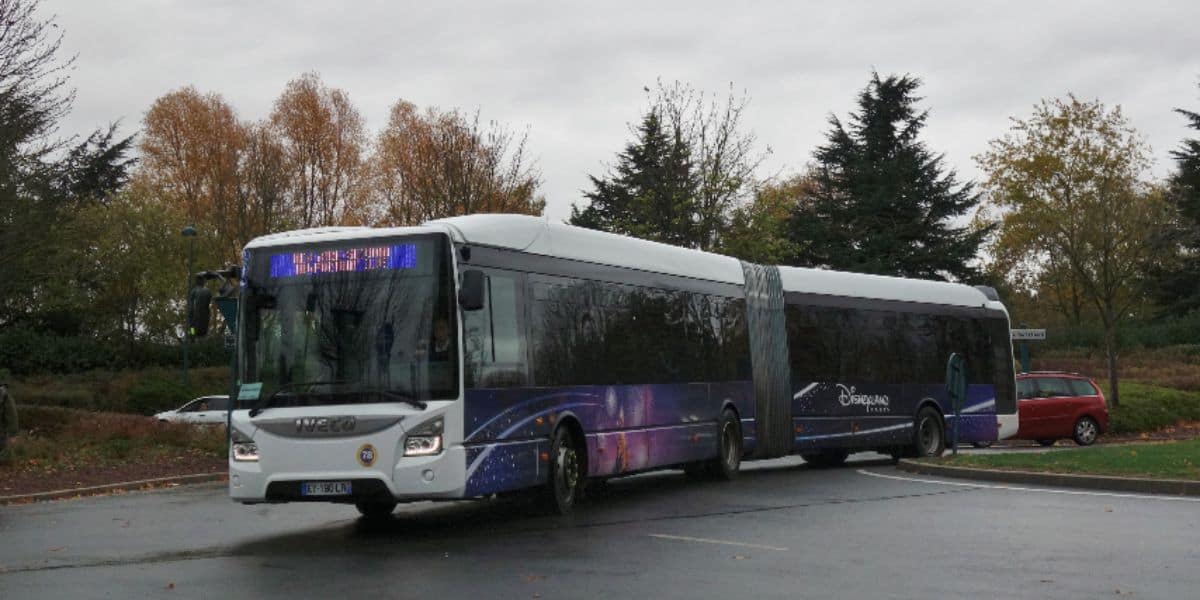
Shuttles drop guests near Disney Village, placing them within walking distance of the parks. The system reduces reliance on private vehicles and concentrates guest movement in a controlled zone.
Not all hotels are included. Disney Davy Crockett Ranch requires guests to drive, while the Disneyland Hotel sits directly at the park entrance. Guests staying at Les Villages Nature Paris typically use a paid public bus with an average travel time of around 20 minutes.
Disneyland Paris Enters Its Glow-Up Era
The timing of the update aligns with major ongoing changes at Disneyland Paris, where infrastructure has been under increasing strain.
Disneyland Park remains the resort’s anchor, home to Sleeping Beauty Castle and attractions including Big Thunder Mountain, Pirates of the Caribbean, and Phantom Manor (its equivalent of Haunted Mansion).

Next door, Walt Disney Studios Park continues a large-scale transformation. Much of the park has been impacted by construction tied to its long-term redevelopment.
In March 2026, the park is set to rebrand as Disney Adventure World, reflecting its expanded scope and reimagined layout.
Planned additions include World of Frozen, a Tangled-themed attraction, and a redesigned central lake that will host the nighttime spectacular Disney Cascade of Lights.

Future concepts include a Lion King–inspired land, complete with a water attraction similar to Splash Mountain and Tiana's Bayou Adventure.
A smaller version of Star Wars: Galaxy’s Edge was previously also announced for the park, but this seems to have been quietly axed since Disneyland Park and Disney's Hollywood Studios debuted their respective lands.
As new offerings come online, Disney is preparing for increased attendance. Clearer transportation flow helps absorb that demand before guests reach the park gates.