Accessibility equipment is supposed to make a theme park easier to navigate. One Disney guest says hers became the problem.
Disney’s theme parks accommodate millions of visitors with different needs, from guests using wheelchairs and mobility aids to those who are blind or have low vision.

At Walt Disney World, Disney advertises services including audio description devices and Braille guidebooks for blind and low vision guests. Its accessibility guidance also points visitors toward mobility devices when navigating parks that require significant walking or standing.
Yet a recent incident has raised questions over how consistently those policies are understood by employees — and prompted an important clarification for visually impaired visitors traveling with white canes.
Visually Impaired Disney Guest Questioned Over White Cane
The incident unfolded at Shanghai Disneyland on September 3, when a visually impaired guest identified as Ms. Song visited the theme park with her boyfriend (via 21 Jingji).
The pair entered at approximately 7:40 a.m. and obtained the resort’s disability access service before continuing into the park.
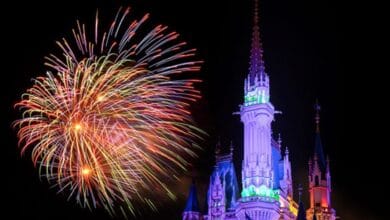
Later that morning, Ms. Song said they stopped near Enchanted Storybook Castle to take photographs. According to her account, an employee then questioned whether she needed to continue using her white cane.

The employee reportedly asked: “Is it necessary to use it all the time? Because there are many people in the park, can you put it away and not use it?”
Ms. Song was confused by the request. She later explained: “I don’t understand why he asked that. Who would use a blind cane if they didn’t need it? For me, the cane is my ‘eyes’.”
She complained to Guest Services several hours later but said the issue could not immediately be resolved because she could not identify which department the employee worked for.
Ms. Song returned to Shanghai Disneyland on September 4 and raised the matter again. She said employees apologized and gave her two stickers after telling her there was no 360 degree surveillance footage covering the area.
The situation subsequently raised a bigger concern for visually impaired guests when conflicting information emerged about whether white canes were even permitted without prior approval.
On September 23, a reporter contacted Shanghai Disney Resort customer service while posing as a prospective visitor.
The representative reportedly described a white cane as belonging to the category of “stick-like items” and suggested that the guest photograph the cane, provide its dimensions by email, and register it before arriving so employees could determine whether it could enter the resort.
For guests who depend on white canes to navigate independently, that advice effectively issued an alarm about potentially encountering inconsistent instructions at the park.
Disney has since made clear that this is not the policy.
Disney Issues Clarification After Accessibility Incident
Shanghai Disney Resort confirmed on September 24 that visually impaired guests do not need to notify the resort in advance before bringing or using white canes.
The resort also said it “completely respects and supports” visually impaired guests using the mobility aids and apologized to Ms. Song over her experience.
Disney later determined that the two employees involved were security staff, according to Ms. Song.
She said the resort promised to strengthen employee training and invited her and her boyfriend to return, offering complimentary park admission and priority access for two attractions.

The episode comes as Disney continues to publicly promote accessibility services across its parks.
At Disneyland Resort in California, Disney’s planDisney service reiterated as recently as September 18 that standard canes and walking sticks are permitted at both Disneyland Park and Disney California Adventure, although they may be inspected by security before entry.
Disney has nevertheless faced complaints over accessibility for visually impaired visitors before.
In 2010, visually impaired Disney annual passholders filed a class action lawsuit alleging shortcomings, including inaccessible maps and signage, and inadequate access to certain viewing areas.
More recently, guests have described difficulties in understanding and accessing accommodations for blind and low-vision visitors at Walt Disney World, even as Disney continues to advertise services specifically intended for those guests.
Have you ever encountered accessibility issues at a Disney theme park?