While everyone has their go-to Walt Disney Animation favorite, it's uncommon to hear someone name Home on the Range (2004) as their top pick.
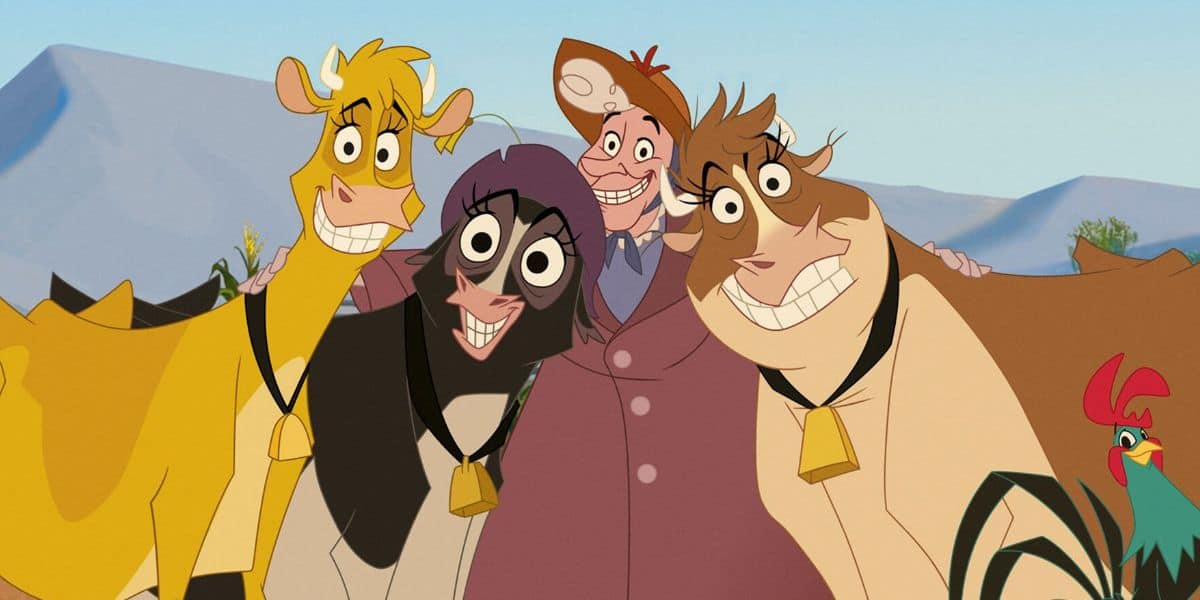
Set in the Old West, Home on the Range follows a trio of mismatched cows named Maggie (Roseanne Barr), Mrs. Calloway (Judi Dench), and Grace (Jennifer Tilly) on a mission to capture the notorious cattle rustler Alameda Slim (Randy Quaid) to save their farm from foreclosure.
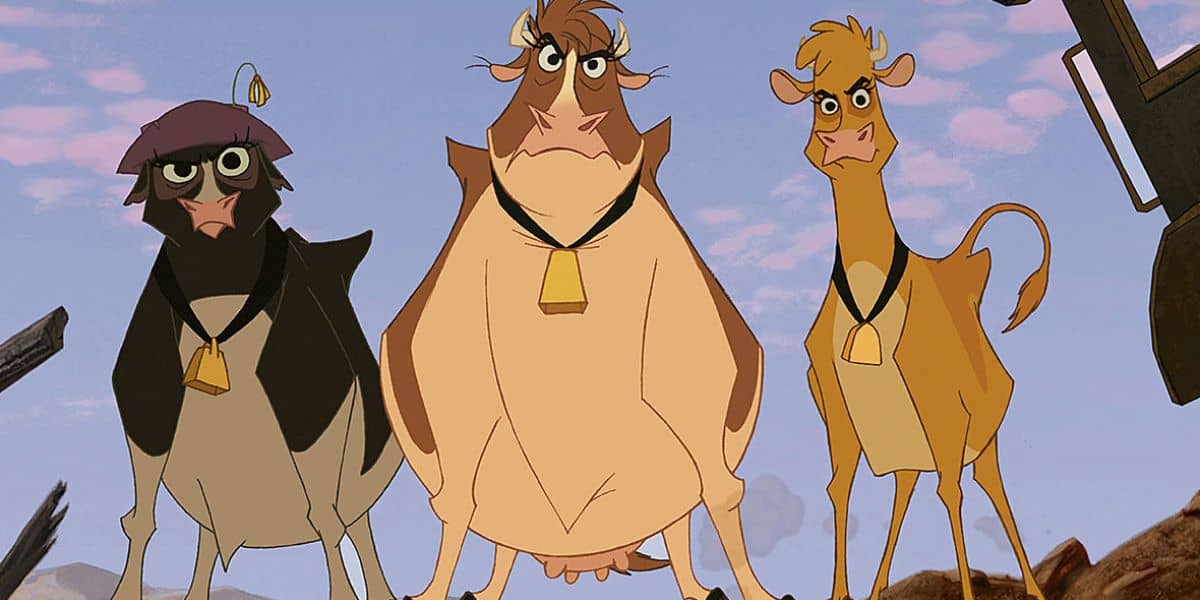
Like the majority of Disney animations, there are plenty of laughs and songs along the way. However, the film notoriously bombed with critics, who slammed its “garish visuals” and “dull plot.” As The Chicago Tribune summarized, “Much of this movie is deadly. Home keeps milking the same gags and throwing the same bull, and after a while you feel cowed watching it.” Ouch.
Taking home just $145.3 million at the box office, much has been made of the film's bleak legacy at The Walt Disney Company. Those who worked on the film have since claimed that the original vision was much stronger – and darker.
In his book “They Drew as They Pleased Vol. 6: The Hidden Art of Disney's New Golden Age,” author Didier Ghez says that the original inspiration was the classic cowboy song “Ghost Riders in the Sky.” Allegedly, the film was supposed to feel more like The Adventures of Ichabod and Mr. Toad (1949).

Director Will Finn also noted that “the story was originally conceived as a ghost story called Sweating Bullets, where a timid character would come and visit this ghost town in the West.”
While it's not clear what went wrong, it's safe to assume that the creative redirection wasn't totally unrelated to interference from Disney's higher-ups. What's really important is that the final product was a major disappointment—and actually changed the direction of Walt Disney Animation forever.
The lesson Disney reportedly took from Home on the Range wasn't that audiences don't want generic storytelling, but that audiences didn't want hand-drawn animation. It wasn't the only film to make them think so.
The early noughties were famously challenging for the company, with a string of disappointments such as Brother Bear (2003). However, Home on the Range was truly the final nail in 2-D animation's coffin.
After the film's release, it didn't release another traditionally animated film until The Princess and the Frog (2009). In fact, it's only released two 2-D animated films since Home on the Range – this and Winnie the Pooh (2011). Instead, after Home on the Range, it immediately defected to 3-D computer animation with the likes of Chicken Little (2005), Meet the Robinsons (2007), and Bolt (2008).
Now, of course, we live deep in the era of 3-D computer animation. But while the likes of Frozen (2013) and Tangled (2010) have proven deeply successful for the company, there's still a huge push from fans who consider the medium to be soulless and generic and are pushing for Disney to return to its hand-drawn roots.
In all likelihood, the odds are slim; Disney's already proven that it can rake in the big bucks without putting in the time, money, and labor needed to animate 2-D features. However, we can't help but imagine a world where Home on the Range was the film Disney envisioned – and managed to make enough money to keep this part of Disney tradition alive.
Do you miss the days of hand-drawn animation?