
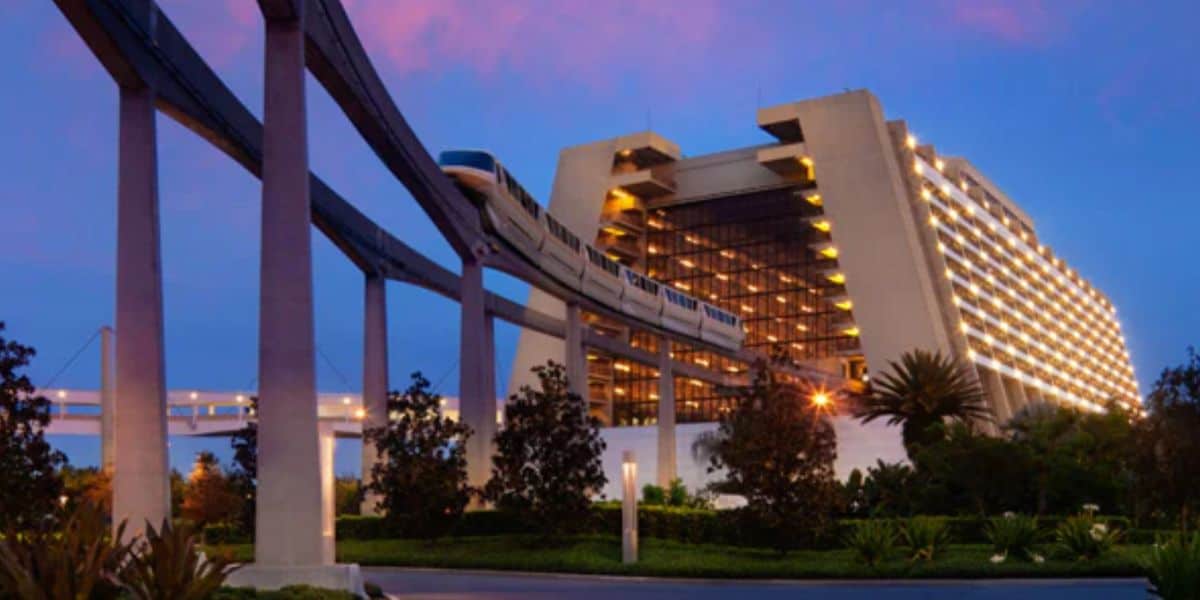
The operational strategy guiding Walt Disney World’s transportation network is undergoing its most significant evolution in decades. For years, the resort's sprawling grid of monorails, ferryboats, buses, and Skyliner gondolas operated as a fluid, open-access ecosystem. Guests were traditionally encouraged to move freely across the property, seamlessly exploring different hotels, dining locations, and shopping districts. However, the summer of 2026 has marked a definitive shift toward data-driven gatekeeping and strict passenger segmentation.

Following the implementation of permanent verification checks at Disney Springs, public attention has shifted to the flagship transit hub of the vacation kingdom: the Seven Seas Lagoon. A new wave of online speculation, catalyzed by a widely discussed post from theme park observer @scottxavier on X, suggests that Disney may be preparing to implement structural restrictions on the Resort Monorail line at the Transportation and Ticket Center (TTC).
According to these rumors, day-guests without verified hotel credentials or confirmed dining reservations would be barred from boarding the Resort Monorail loop, effectively isolating the premium Magic Kingdom Resorts from casual foot traffic. While Disney has not officially confirmed these changes, the speculation aligns precisely with a sequence of concrete restrictions recently deployed to manage guest flow around the monorail loop.
Digital Gatekeeping: Geotracking at Monorail Resorts
To evaluate the plausibility of the rumored monorail restrictions, one must first look at the digital infrastructure Disney has already activated to control day-guest access. For years, driving a personal vehicle to Deluxe properties like Disney’s Contemporary Resort, Polynesian Village Resort, or Grand Floridian Resort & Spa required a valid hotel room key or an advance table-service dining reservation.

Day-guests quickly discovered a convenient loophole: placing a quick-service mobile order on the My Disney Experience app for an item at a location like Capt. Cook's or Contempo Café, and showing the digital receipt to the parking lot guards to secure entry.
To permanently close this parking workaround, Disney recently deployed highly localized geotracking technology within its mobile ordering interface. The app now actively verifies a user's real-time GPS coordinates before allowing them to finalize an order. If a guest attempts to select “I'm Here, Prepare My Order” while sitting in their vehicle at the TTC parking lot or outside the immediate resort perimeter, the app blocks the transaction. By requiring guests to be physically within the resort boundaries before an order can be prepared, Disney has effectively neutralized the mobile-order parking hack, ensuring that only legitimate hotel guests and confirmed diners use the resort facilities.
Restricting the Walkways: The TTC Pedestrian Boundaries
In tandem with digital geotracking, Disney has tightened physical access along the scenic walking paths that trace the edge of the Seven Seas Lagoon. Following the completion of the pedestrian bridge system linking the Grand Floridian directly to the front entrance of Magic Kingdom, it became theoretically possible for a guest to park at the TTC, walk through the Polynesian Village Resort, bypass the monorail queues entirely, and walk directly to the park gates.
To manage foot traffic volume and preserve these walkways as a quiet, premium amenity for hotel residents, Disney began banning non-resort guests from using these resort paths to walk from the Transportation and Ticket Center to Magic Kingdom. Security checkpoints positioned along the pedestrian boundaries now actively turn away offsite day-guests, redirecting them back toward the central mass transit lines. This operational policy established a clear precedent: physical presence within the grounds of the Magic Kingdom Resorts is increasingly being treated as an exclusive privilege for paying residents rather than a public right-of-way.
The New Frontier: Restricting the Resort Monorail Platform
The emerging rumor regarding the Resort Monorail loop represents the next logical phase in this zoning strategy. As highlighted by @scottxavier and debated across online enthusiast forums, the proposed change would structurally alter how the Transportation and Ticket Center manages its boarding platforms.
Currently, the TTC splits its monorail traffic into two separate lines: the Express Monorail, which travels directly to the Magic Kingdom entrance, and the Resort Monorail, which stops sequentially at the Polynesian, the Grand Floridian, the Magic Kingdom, the Contemporary, and returns to the TTC. Historically, any guest could board either line, allowing casual day-guests to easily use the Resort Monorail to “resort hop,” browse retail shops, or purchase quick-service snacks.
The rumored policy would introduce digital touchpoints—such as MagicBand or MagicMobile scanning tablets—at the entrance turnstiles for the Resort Monorail platform at the TTC. Non-resort guests would be systematically blocked from entering the queue unless they could scan a valid resort room key or a confirmed, timed dining reservation code. Those without credentials would be restricted exclusively to the Express Monorail or the ferryboat lines, preventing them from using the TTC as a launching point to explore the hotels casually.
Operational Logic: Preserving the Premium Experience
While a monorail restriction would undoubtedly frustrate casual day-guests and local annual passholders who enjoy resort hopping, the corporate logic behind such a policy is grounded in capacity management. The Resort Monorail loop frequently experiences severe overcrowding, particularly during afternoon storms and immediately following the nightly fireworks. When thousands of day-guests flood the resort line simply to escape long queues at the Express Monorail, they directly compromise the transportation speed and comfort promised to guests paying premium rates for Deluxe accommodations.
By filtering out non-resort traffic at the TTC source, Disney can ensure its transportation assets are prioritized for the consumers directly driving luxury lodging revenue, bringing a new level of predictability to the Magic Kingdom Resorts ecosystem. As Walt Disney World moves toward a more transactional, closed-loop model, guests looking to visit these iconic properties will simply need to plan and secure a formal reservation.



We are a family of 6. We go to Orlando 3 times a year. Lately since it has gotten so expensive for all of us to do long park trips, we hit up a park or two and then get the Disney fix through resort exploring. I think it is fair to park at a park and pay the $35 since I am still using the Disney property, but to ban all non-guests from the resorts is a big mistake. We still drop $100’s of dollars for lunch, dinner, snacks, merch, etc. We usually try not to reserve dining because we do not know where the day is taking us. The money grubbing execs are pricing the everyday families who enjoy their multiple Disney trips away.
The transportation system was set up for resort guests not for non-resort guests. You can still make a reservation and explore the resort where your reservation is. I see this as a safety issue as well. Too many people have ruined/taken advantage of the lack of security to use the pools, and the resort’s extra amenities. A few ruin it for all.