The “merger of equals” between Six Flags and Cedar Fair was supposed to create a stabilized powerhouse capable of rivaling Disney and Universal. Instead, the newly formed Six Flags Entertainment Corporation is currently navigating a financial “death drop” that has forced it into one of the riskiest borrowing moves in theme park history.
On January 7, 2026, the company officially priced a $1 billion offering of senior notes, but the numbers under the hood have sent a chill through Wall Street. To survive an “alarming” attendance crisis and reach its “Profitable 2026” goals, Six Flags is now paying interest rates that resemble personal credit cards rather than corporate bonds.
The Refinancing Gamble: Trading 5% for 8.6%
The core of the gamble is a strategy financial analysts call “pushing out the cliff.” Six Flags is using the $1 billion in new debt—which carries a steep 8.625% interest rate—to pay off older debt that was set to expire in 2027.

The catch? That older debt only carried interest rates between 5.3% and 5.5%.
In simple terms, Six Flags is paying nearly $30 million more per year in interest just to buy itself more time. This “refinancing shock” is a direct result of the high-interest-rate environment of 2026 and the market’s skepticism toward the regional park industry. For the company to break even on this move, the 2026 season must be nothing short of legendary.
The “Alarming” Problem: The Empty Coaster Syndrome
Why would a company take on such expensive debt? Because, according to recent reports from TheStreet, Six Flags is facing an attendance “death spiral.” Despite the merger bringing 42 of North America’s most iconic parks under one roof (including Cedar Point and Six Flags Magic Mountain), guest numbers have stalled.

- Single-Day Ticket Slump: Casual visitors are staying home, deterred by high prices and a perceived “lack of value” compared to local entertainment options.
- The “Premium” Backfire: Management’s previous strategy to remove discounts and “up-charge” for every experience has alienated the core middle-class families that form the backbone of regional park revenue.
- Maintenance Backlogs: Years of underinvestment have left some parks with frequent ride closures and a “concrete jungle” aesthetic that struggles to compete with modern, immersive attractions.
The 2026 “Merge and Purge” Strategy
To satisfy the creditors holding that new $1 billion debt, Six Flags CEO Richard Zimmerman was executing a ruthless “Merge and Purge” plan for 2026. The goal is to find $120 million to $180 million in “synergies” (corporate-speak for cost-cutting).

- Massive Headcount Reductions: The company has already begun a “headcount reduction” exceeding 10% of its workforce, consolidating corporate functions between the old Cedar Fair and Six Flags teams.
- The Asset Fire Sale: To pay down its $5.2 billion total debt load, the company is actively exploring the sale of non-core assets and excess land. Rumors suggest that underperforming parks in the portfolio could be sold or shuttered by the end of 2026 to provide a much-needed cash infusion.
- Capital Expenditure Cuts: While the company is investing $1 billion into “guest experience” over two years, it has actually scaled back its 2026 capex budget to $400 million—down from original estimates—prioritizing high-margin food and beverage upgrades over building the world's tallest roller coasters.
What This Means for 2026 Guests: The “Value” Pivot
If you’re planning a trip to a Six Flags or Cedar Fair park in 2026, the financial pressure will be visible in your wallet. To fix the attendance problem, the company is launching its most aggressive Season Pass campaign in a decade.

The new “All Park Passport” is the cornerstone of the 2026 strategy, offering unlimited access to all 42 parks for a price point designed to “recapture” the 10 million visits lost during the post-pandemic slump. The bet is simple: if they can get you through the gate with a cheap pass, they can make up the difference with the high-interest debt payments through $15 sodas and $40 “Flash Passes.”
The Bottom Line: Breakout or Bankruptcy?
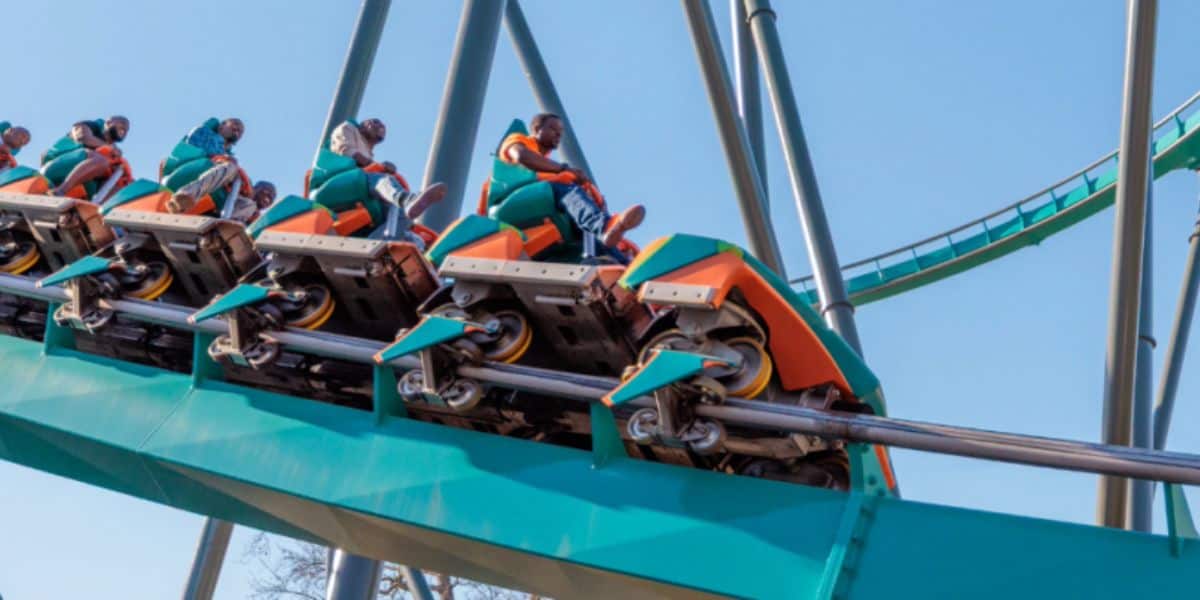
Six Flags is currently riding the most dangerous coaster of all: The Debt Cycle. If the 2026 “Value Pivot” works and attendance rebounds to its goal of 58 million guests, the company will have successfully refinanced its way to safety.

However, if the “alarming” trend of empty mid-week midways continues, that 8.6% interest rate will start to look like a noose. For the “King of Thrills,” 2026 isn't just another season—it’s a $1 billion fight for the right to keep the gates open.
Are you planning to buy a 2026 Season Pass to take advantage of the new “All Park” access, or are the “credit card” interest rates a sign of a park experience in decline?