

The Acolyte lasted just one season on Disney+, but the Star Wars series continues to generate discussion long after its cancellation.

New comments from creator Leslye Headland, combined with renewed streaming success and revelations about abandoned storylines, have prompted fresh debate about whether the High Republic drama deserves another look.
Disney officially ended the series in 2024 after a divisive first season. The show became a frequent target of online criticism and coordinated review campaigns, while several cast members faced harassment across social media platforms. Beyond the controversy, economics ultimately proved decisive.
Disney Entertainment Co-Chairman Alan Bergman explained that the series' production budget, which reportedly exceeded $200 million, made future seasons difficult to justify, noting that the show's “cost structure did not allow for a second season.”

Yet audience behavior since then has painted a more complicated picture. According to FlixPatrol data released earlier this year, The Acolyte returned to Disney+'s Top 10 rankings nearly two years after its debut. The achievement was notable for a show many assumed had disappeared from the broader Star Wars conversation.
The timing coincided with the arrival of Star Wars: Maul — Shadow Lord, Dave Filoni's latest animated entry in the franchise. The series became a major streaming success, topping television rankings on Disney+ during its run and placing second overall behind a special preview presentation for The Devil Wears Prada 2 (2026).
The overlap may not be accidental. Both productions explore aspects of Force mythology that sit outside traditional Jedi-versus-Sith storytelling. Rather than focusing solely on heroes and villains, they examine the gray areas that exist between them. For some viewers, Shadow Lord may have served as a gateway back to The Acolyte and its similarly ambitious approach.
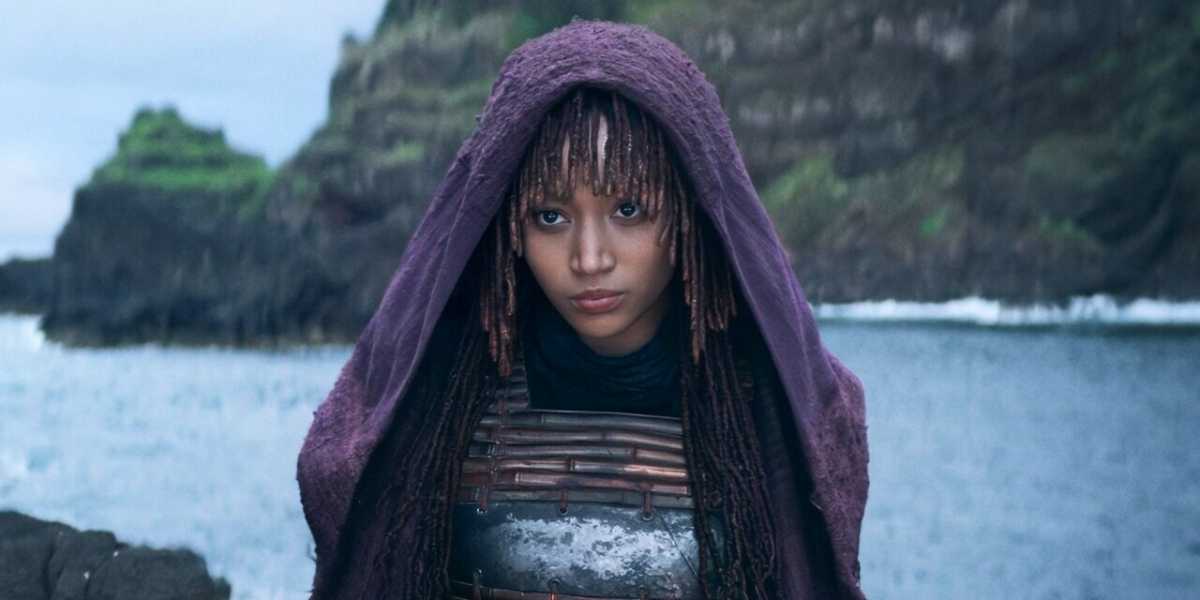
Another piece of the puzzle emerged through Empire Magazine (via The Direct), which recently revisited the canceled series. Headland revealed that the show's current format on Disney+—where all eight episodes are available at once—aligns with the way she always imagined audiences would watch it.
“It was designed that way,” she explained. The filmmaker said the story was structured to function as a binge-watch experience, ideally consumed over one or two sessions. That approach contrasts with Disney's original release strategy, which launched the series with a two-episode premiere before shifting to weekly installments.
For Headland, the uninterrupted version now available on Disney+ may represent the closest audiences can get to the viewing experience she initially envisioned. That said, the details surrounding the unmade second season continue to intrigue Star Wars fans.
At the center of those plans was Manny Jacinto's Qimir, one of the breakout characters from Season 1. Future episodes reportedly would have explored the possibility that Qimir was connected to the origins of Ren, the figure whose legacy eventually gave rise to the Knights of Ren seen during the sequel trilogy era.

Such a storyline would have significantly expanded the group's place in Star Wars history. Rather than functioning as a relatively mysterious organization tied primarily to Kylo Ren, the Knights would have been linked to a much older dark-side tradition operating separately from the Sith.
Headland's proposed continuation also would have introduced Darth Plagueis more prominently into the narrative.
His presence would have provided additional insight into the Rule of Two and helped establish connections leading toward the eventual emergence of Emperor Palpatine. Simultaneously, Qimir's links to the criminal underworld were expected to receive further development, reinforcing one of the show's key themes—that Force users rarely fit into neat categories.
The broader goal appears to have been to strengthen the connective tissue across different eras of Star Wars storytelling. Rather than revising established canon, the second season would have expanded it, creating a clearer path from the High Republic period to the events of Star Wars: Episode VII—The Force Awakens (2015).
Whether any of those ideas can still be realized remains uncertain.

Lucasfilm has undergone a significant leadership transition following Kathleen Kennedy's departure. Dave Filoni and Lynwen Brennan now serve as co-presidents, placing two new executives at the center of the franchise's future direction. At the same time, Star Wars is entering one of its busiest periods in years.
The Mandalorian and Grogu (2026), directed by Jon Favreau, arrived in theaters on May 22, although it did not become the worldwide box-office phenomenon some anticipated. Looking ahead, Shawn Levy is preparing Star Wars: Starfighter (2027), while Ahsoka Season 2 remains scheduled for an early 2027 debut on Disney+.
Even with those projects occupying Lucasfilm's attention, The Acolyte‘s resurgence has become difficult to ignore. Streaming interest remains strong, conversations about the series continue, and many of its unfinished storylines still resonate with fans eager to see where they might have led.
The series featured Amandla Stenberg as Mae and Osha Aniseya, Lee Jung-jae as Master Sol, Rebecca Henderson as Vernestra Rwoh, Jodie Turner-Smith as Mother Aniseya, Dafne Keen as Jecki Lon, Charlie Barnett as Yord Fandar, Carrie-Anne Moss as Master Indara, and Dean-Charles Chapman as Torbin.

For supporters, the show's willingness to challenge assumptions about the Jedi and explore a more complicated version of the High Republic era remains one of its defining qualities.
A return is far from guaranteed. Still, with changing leadership, renewed viewership, and continued interest in its mythology, The Acolyte occupies a position few canceled series manage to achieve: its future remains a subject of genuine speculation.
All eight episodes of The Acolyte are currently streaming on Disney+.
What are your thoughts on The Acolyte? Let us know in the comments down below!


I watched every episode of the show. It was terrible, no matter how you look at it. The script, direction, actors, and its built-in wokeness were all a disaster! You cannot start with people who have no love or appreciation for the source material and expect them to make a suitable addition. You especially cannot take people with an open agenda and give them the reins of one of the top IPs in existence and not expect fallout from die-hard fans! It is the absolute worst Star Wars show ever made! It needs to be buried and never spoken of again! At least the Star Wars Christmas Special was so bad it was funny! This is just bad!