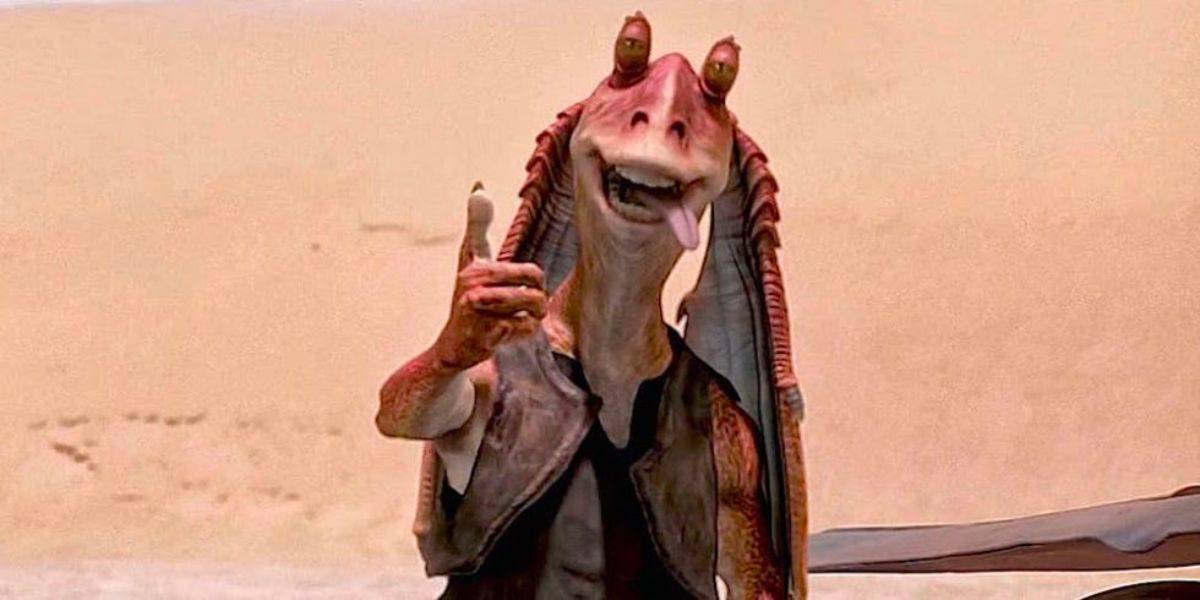
For years, Jar Jar Binks has been one of the most talked-about—and often criticized—characters in Star Wars. Ever since his debut in Star Wars: Episode I – The Phantom Menace (1999), the Gungan has been stuck in a reputation that’s been hard to shake: comic relief that didn’t quite land the way George Lucas may have intended.
But in 2026, that narrative is starting to shift in a pretty meaningful way.
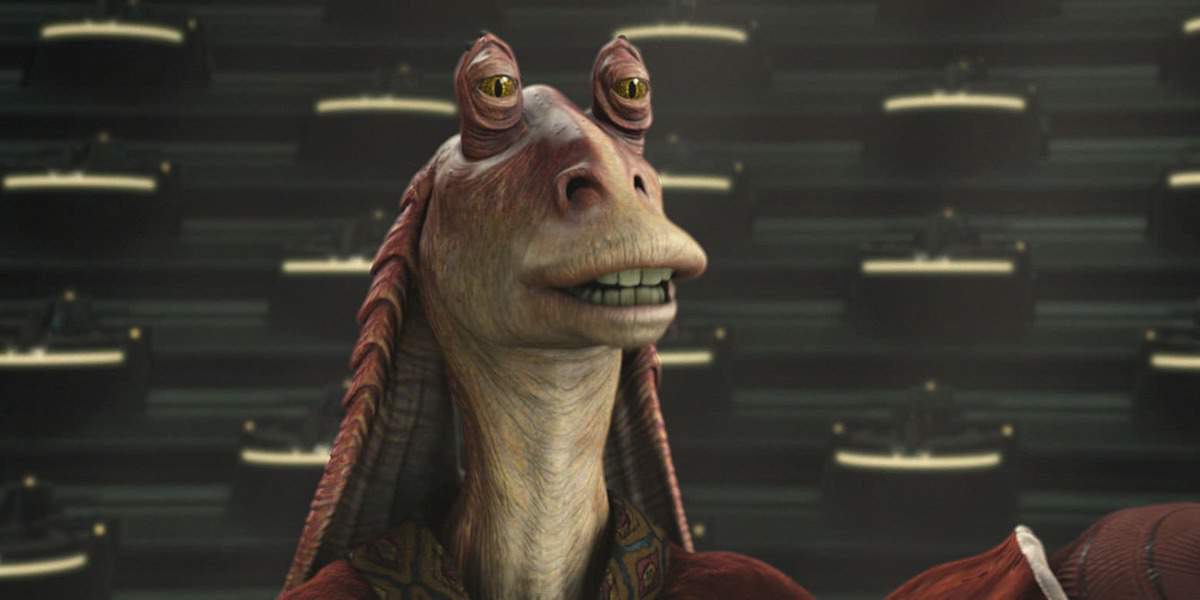
A newly released Star Wars comic is quietly changing how fans look at Jar Jar Binks, and while it’s not coming from a blockbuster film or Disney+ series, the implications are surprisingly big—especially when you connect it back to the prequel trilogy.
A Small Change With Big Implications
The story comes from Jar Jar #1, a comic co-written by Ahmed Best, the actor who originally portrayed Jar Jar. That alone gives the project a unique level of credibility, but it’s what the story reveals that really stands out.
According to the comic, Jedi Knight Kelleran Beq—who fans may recognize from The Mandalorian (2019)—had already grown suspicious of Chancellor Palpatine long before the events of Star Wars: Episode III – Revenge of the Sith (2005). Instead of keeping those concerns to himself, Beq shares that information in a way that ultimately reaches Jar Jar.
That’s where things start to change.
Because suddenly, Jar Jar’s role in Star Wars: Episode II – Attack of the Clones (2002)—where he helps grant Palpatine emergency powers—doesn’t look quite as simple as it once did.
Jar Jar Wasn’t Completely in the Dark
For decades, that Senate moment has been viewed as one of the biggest missteps in the Star Wars story. Jar Jar, seen as naïve and easily influenced, unknowingly helps pave the way for the Empire.
But this new interpretation adds a layer that wasn’t there before.
Instead of acting purely out of ignorance, Jar Jar may have had at least some awareness that something wasn’t right. He wasn’t handed all the answers, but he had enough of a warning to question what was happening.
And that changes everything.
Now, that decision becomes less about a lack of intelligence and more about hesitation. About not fully trusting a gut instinct. About being caught in a political moment that moved faster than he could react to.
A More Human Kind of Failure
What makes this shift so interesting is how grounded it feels.
Star Wars has always leaned into big, sweeping themes—good versus evil, light versus dark. But this retcon pulls things back into something more relatable. It suggests that the fall of the Republic wasn’t just the result of a master plan executed perfectly by Palpatine.
It was also shaped by smaller failures along the way.
Jar Jar becomes part of that chain. Not as a joke, but as someone who was in over his head and didn’t act decisively when it mattered most.
That’s a very different character than the one fans met in 1999.
What This Means for the Prequel Trilogy
This update also has ripple effects across the broader Star Wars timeline.
Traditionally, the Jedi Order’s downfall has been explained by their inability to detect Palpatine’s true identity. The moment Anakin reveals the truth in Star Wars: Episode III – Revenge of the Sith (2005) has always been treated as the turning point.
But this comic suggests something else: the warning signs may have been there much earlier.
If Kelleran Beq had already started connecting the dots—and if that information reached Jar Jar—then the failure wasn’t just about being blindsided. It was about not acting on what was already known.
That adds a layer of tragedy to the entire story.
Canon Questions Still Remain
Of course, there’s one big question hanging over all of this: how official is this change?
While Jar Jar #1 is part of the expanding Star Wars storytelling universe, comics don’t always carry the same weight as films or Disney+ series. That means this reinterpretation could exist more as a supplemental layer rather than a full rewrite of canon.
Still, that doesn’t make it any less important.
Even if it never gets referenced on screen, it’s already influencing how fans talk about Jar Jar—and that alone is a big shift.
For a long time, Jar Jar Binks has been an easy target in Star Wars discussions. But this new perspective invites fans to take a second look.
Instead of seeing him as a mistake, it opens the door to viewing him as a tragic figure—someone who played a key role in galactic history without fully understanding the weight of his choices until it was too late.
And in a franchise built on redemption arcs and complicated heroes, that kind of reinterpretation fits right in.
After all these years, Jar Jar Binks might finally be getting the depth fans never expected.