It seems inevitable that the Walt Disney Company's lawsuit against Florida Governor Ron DeSantis will end up in the Supreme Court. No matter who wins in the Northern District of Florida, the case will be appealed before eventually landing on the doorsteps of the High Court.
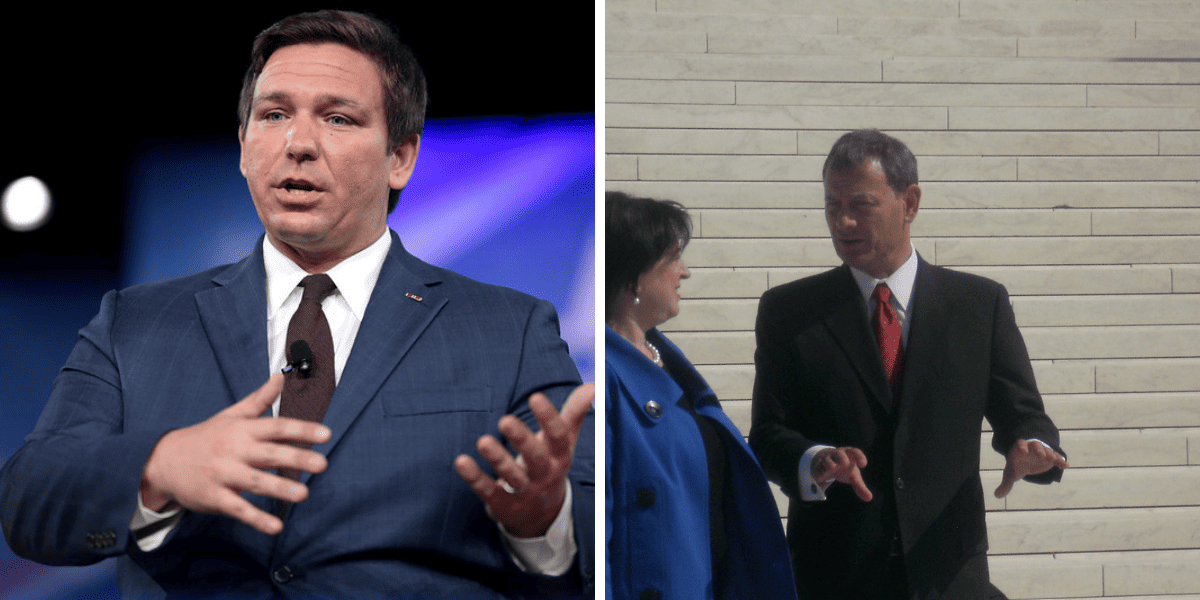
But before Disney's case even arrives at the Supreme Court, the justices hint at how they plan on ruling. Chief Justice John Roberts, in an opinion on another case, strongly suggested that he would uphold the contract clause of the Constitution.
Disney moved its contract clause lawsuit against Gov Ron DeSantis and the Central Florida Tourism Oversight District to State Court earlier this month. That case is separate from Disney's First Amendment case against Governor DeSantis. It also seems inevitable that Disney's contract case will end before the Supreme Court.
With the Court dropping hints on its actions, there are two cases that, if they are allowed to stand, could drastically impact the Walt Disney Company, Walt Disney World, and Disney's streaming services. Let's take a look at those cases.

Doe V. McKesson
This case deals with a group, organization, or an individual's First Amendment right to protest. In this case, the Fifth Circuit Court of Appeals ruled anyone who organizes a protest may be held liable for the actions of someone else who attended or participated in the protest.
Should the Court uphold the ruling from the Fifth Circuit, it would significantly curtail a person's or a company's right to protest.
This is the heart of Disney's case against Florida Governor Ron DeSantis. Disney claims that Gov DeSantis and the Florida Legislature retaliated against them for speaking out against Florida's Parental Rights in Education Act, known by its critics as the “Don't Say Gay” bill.

Albeit timidly, former Disney CEO Bob Chapek spoke out against the bill. This ruling could allow the governor's laws stripping Disney of its special district to stand and curtail Disney's and other corporations' ability to speak out or protest against a rule they disagree with. Disney, as the organization that started the protest, could be held liable for the actions of people protesting the Florida law.
NetChoice V. Paxton
This case deals with content moderation online. Texas passed a law that allowed the GOP-controlled legislature to seize control of content moderation online. This case, again, went to the United States Court of Appeals for the Fifth Circuit. A lower court immediately declared the law unconstitutional, but the Fifth Circuit reinstated it.
This law bans websites with over 50 million users from banning a user based on that person's “viewpoint.” If upheld, this law would allow state legislatures to moderate online content.
So, how does this relate to Disney? If, say, someone posted something deemed “hate speech” in the comment section of an ABC News or ESPN story, and Disney removed it from the site, this law would allow a state legislature to put that content back onto the site.

Florida Governor Ron DeSantis has spent his Presidential Campaign discussing how Disney is sexualizing children. This law would open the door for removing content that state legislatures deemed inappropriate. So, if a state legislature considered showing a gay character to viewers under 18, that content could be removed from that state.
All of these cases will have far-reaching ramifications on American society. Still, they will also affect the outcome of the Walt Disney Company's claims against Florida Gov Ron DeSantis. Disney has not found much luck at the High Court, but these cases will decide the future of the Disney lawsuit, among many other, more important, things.
We will continue to update this story at Disney Fanatic.