
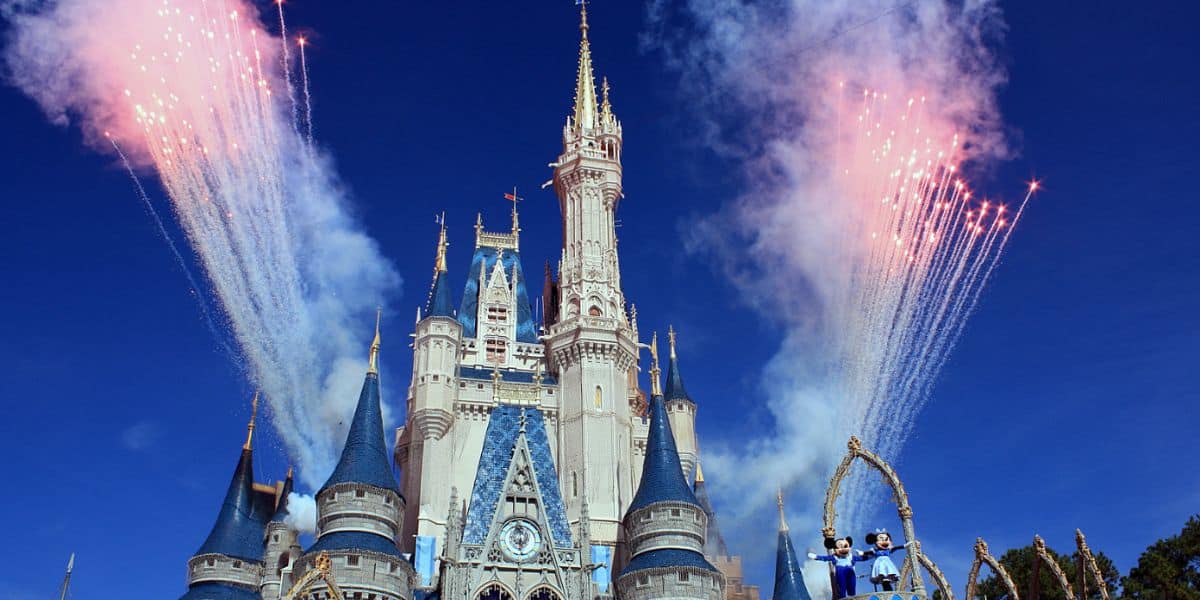
For years, Disney Springs has quietly served as something more than a shopping and dining destination. It has also been the starting point for one of Walt Disney World's most well-known transportation workarounds.
Guests could park for free at Disney Springs, hop on a resort bus, and continue their journey across property. Some used it to reach dining reservations. Others used it to explore Disney Resort hotels. And some simply used it as a way to avoid parking fees elsewhere around Walt Disney World.
That era is about to end.

Beginning June 28, Disney will require guests boarding resort buses at Disney Springs to provide proof that they have a valid reason to visit a Disney Resort hotel. Guests will need an active resort reservation, a dining reservation, or a confirmed recreation booking before they can board.
At first glance, many Disney Resort hotel guests may see the move as a major victory.
The reality may be far more complicated.
Disney Finally Closed a Longstanding Loophole
Disney Springs has always occupied a unique position within Walt Disney World.
Unlike the theme parks, it offers free parking. That made it attractive not only for shopping and dining but also for guests looking to move around property without paying additional fees.
Over time, the workaround became increasingly common. While it wasn't always convenient, it gave guests another option for navigating Disney property.
Disney's new verification process is clearly designed to stop that practice. The company wants resort transportation serving guests who actually have business at Disney hotels rather than functioning as a free transportation network for anyone on property.
From an operational standpoint, the decision makes sense.
The problem is that many guests are treating this as a transportation improvement when it may only be a transportation restriction.
Resort Guests Still Face the Same Problem
Ask almost any frequent Disney Resort guest about transportation and you'll hear the same complaints.
Long bus lines.
Crowded vehicles.
Inconsistent wait times.
Buses arriving full during peak periods.
Those frustrations aren't new. They've existed for years.
Disney's latest move may remove some riders from the system, but it doesn't actually increase transportation capacity.
There has been no announcement about additional buses.
No announcement about increased staffing.
No announcement about expanded operating schedules.
No announcement about more transportation resources being dedicated to resort guests.
That's an important distinction.

Reducing demand and increasing capacity are not the same thing.
The Real Win Would Have Been More Buses
Many resort guests are celebrating because they believe shorter lines are coming.
Maybe they will be.
But perhaps not to the degree many are expecting.
Most people waiting in Disney Springs bus queues are already resort guests trying to return to their hotels after dining, shopping, or entertainment experiences.
Removing transportation workaround users may help during certain periods, but it won't suddenly eliminate the long waits that guests have complained about for years.
A true transportation victory would look very different.
More buses during peak hours.
Better dispatching.
Additional drivers.
Reduced wait times throughout the day.
Those are the improvements that directly affect the guest experience.
Instead, Disney chose a solution that primarily limits access.
Why Disney Chose This Route
The answer is fairly straightforward.
Adding transportation capacity costs money.
More buses require more maintenance.
More drivers require more payroll.
Expanded service requires additional operational spending.
Transportation verification, on the other hand, is significantly cheaper.
Disney can reduce congestion without dramatically increasing expenses.
From a business perspective, that's an easy decision.
It's also consistent with Disney's broader effort to create more structure throughout the vacation experience. Reservation systems, Lightning Lane selections, mobile ordering, and transportation verification all follow the same basic philosophy: greater control and greater predictability.

The Biggest Losers May Be Resort Guests
Ironically, the guests Disney is trying to protect may ultimately be the ones left wanting more.
Not because transportation verification is a bad idea.
In many ways, it's probably overdue.
The issue is that Disney solved one problem while leaving another untouched.
Guests who stay at Disney Resorts pay a premium for convenience. Transportation is one of the most important perks included with that price.
Yet many of the transportation complaints resort guests have today will likely still exist on June 29.
The lines may be slightly shorter.
The buses may be slightly less crowded.
But the underlying system remains unchanged.
For years, Disney guests have asked for better transportation.
What they're getting instead is more exclusive transportation.
Those two things are not necessarily the same.





when I stay on property, I like to resort hop and see the other resorts so are they saying that we can not resort hop around the resorts especially around the holidays the way t sounds they do not want people to resort hop am i wrong