The historic $8 billion merger between Six Flags and Cedar Fair was billed as a “new era of thrills.” But as of January 15, 2026, the newly formed Six Flags Entertainment Corp is riding a financial “death drop” that has forced the company into a ruthless survival mode. With a staggering $5.2 billion in total debt and interest rates at levels analysts call “credit card levels,” the company is now moving to sell off significant portions of its portfolio to keep the gates open elsewhere.

A digital paper trail of trademark filings reveals that the sell-off isn't just a rumor—it’s an active liquidation. As many as five major regional parks appear to have been moved into a new entity, signaling the end of the “Six Flags” era for millions of fans.
The $1 Billion Interest Rate Shock
The primary driver behind the current fire sale is a massive “refinancing gamble.” On January 14, 2026, Six Flags officially completed a private offering of $1 billion in senior notes. While this move provides immediate cash to pay off debt expiring in 2027, it comes with a brutal price tag: an 8.625% interest rate.
By trading in older 5.5% debt for this new 8.6% rate, Six Flags is effectively paying nearly $30 million more per year in interest just to buy itself more time. To satisfy creditors, CFO Brian Witherow recently confirmed that “getting the portfolio smaller and more nimble is a priority.” In corporate-speak, this means the company is actively divesting “non-core” assets to pay down its high-interest loans.
The “Enchanted” Five: Trademark Leaks Reveal the Sell-Off
The most alarming evidence of a sell-off comes from the U.S. Patent and Trademark Office. Between January 8 and 9, 2026, an entity named “Enchanted Parks Holdings, LLC” filed trademark applications for five specific regional parks. These filings suggest that these properties are being stripped of the “Six Flags” and “Cedar Fair” branding and sold to a mystery buyer, suspected to be Orlando-based Innovative Attraction Management (IAM).

| Current Park Brand | Proposed “Enchanted” Rebrand |
| Six Flags St. Louis (MO) | Enchanted Parks St. Louis |
| Michigan's Adventure (MI) | Enchanted Parks Michigan Adventure |
| Worlds of Fun / Oceans of Fun (MO) | Enchanted Parks Oceans of Fun |
| The Great Escape & Lodge (NY) | Enchanted Parks Great Escape Lodge |
| Schlitterbahn Galveston (TX) | Enchanted Parks Galveston |
By offloading these “mid-tier” parks, Six Flags can shed the massive licensing fees associated with DC Comics (Batman/Superman) and Looney Tunes, while using the sale proceeds to stabilize its balance sheet.
Core vs. Non-Core: A Strategy of Survival
Six Flags is currently categorizing its 42 properties into two groups: those that make money and those that cost too much to maintain.

- The “Core” Crown Jewels: Parks like Cedar Point, Magic Mountain, Knott’s Berry Farm, and Canada’s Wonderland are considered safe. These parks generate high per-capita spending and are the focus of a planned $1 billion investment in “guest experience” over the next two years.
- The “Non-Core” Chopping Block: Regional parks with lower attendance or higher maintenance backlogs—like those in the Enchanted Parks filings—are being treated as “low-hanging fruit” for liquidation.
What This Means for 2026 Season Pass Holders
The financial “squeeze” will be felt most by the guests. To bridge the gap created by the $5.2 billion debt, Six Flags is pivoting to a high-volume model:

- The “Value” Pivot: Aggressive Season Pass campaigns (like the new All Park Passport) aim to get as many bodies through the gate as possible.
- Secondary Spending Squeeze: Once inside, guests can expect higher prices for food, beverages, and “Flash Passes” to offset the high interest payments on corporate debt.
- Loss of Reciprocity: If your local park becomes an “Enchanted Park,” it will likely be removed from the Six Flags/Cedar Fair national network, meaning your “All Park” pass may no longer grant you entry.
Conclusion: A $1 Billion Fight for the Future
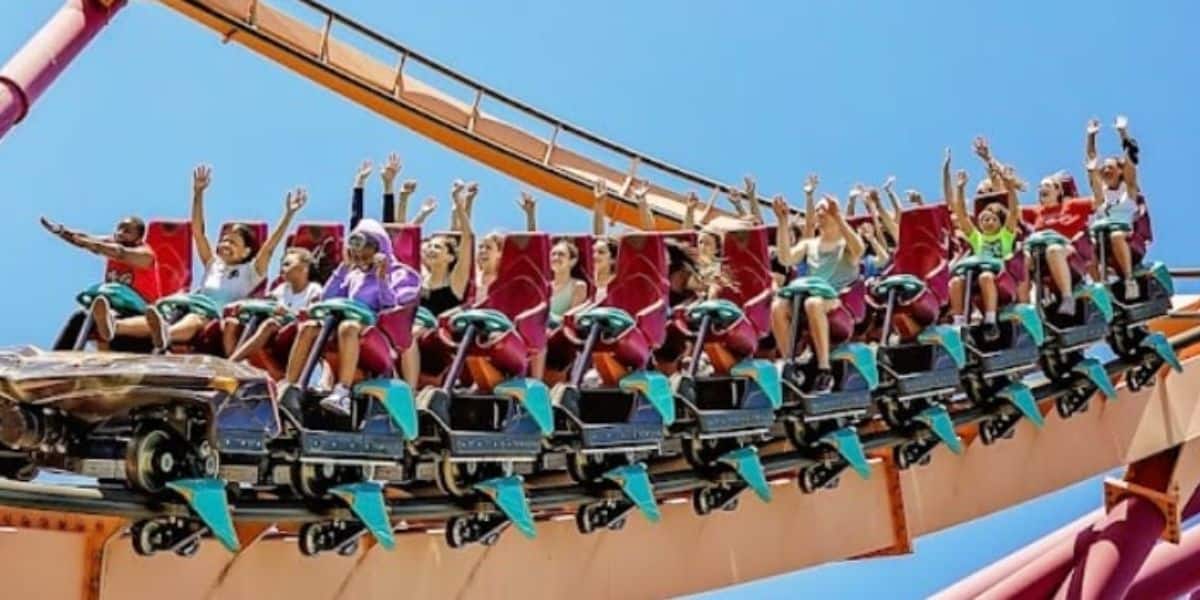
As of mid-January 2026, Six Flags is riding the most dangerous coaster in its history. The company has successfully “pushed out the cliff” by refinancing its debt, but at a cost that requires the 2026 season to be nothing short of legendary.

For the “King of Thrills,” the sale of these five parks is more than just a business transaction—it is a desperate attempt to ensure that the rest of the empire doesn't follow suit.