Jonny Coyne had his bags packed.
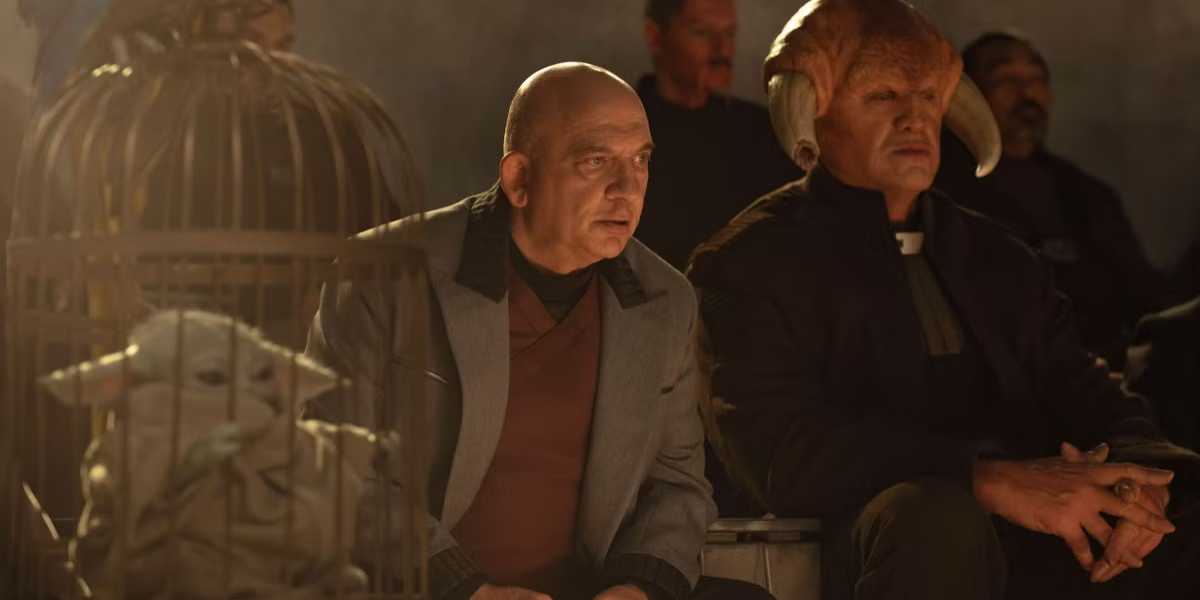
The British character actor, known to Star Wars fans as Commander Coin — the steely Imperial loyalist who was part of the Shadow Council in The Mandalorian Season 3 — had been contracted for a full run of episodes in what was then being developed as Season 4. He had a character arc. He had a role in the story Lucasfilm was planning to tell. Then he had nothing.
“There was a time when I was booked to do a whole load of other episodes in season 4,” Coyne told GamesRadar+. “And then that show went away, and then there was an actor strike, and there was COVID, and all sorts of things going on, and it was a difficult time.”
The story of how The Mandalorian Season 4 became The Mandalorian and Grogu — the theatrical film that opened May 22, 2026 — is one of the more revealing case studies in how thoroughly the entertainment industry's crises of the early-to-mid 2020s reshaped the projects that survived them. It is also, through Coyne's account, a surprisingly personal one.
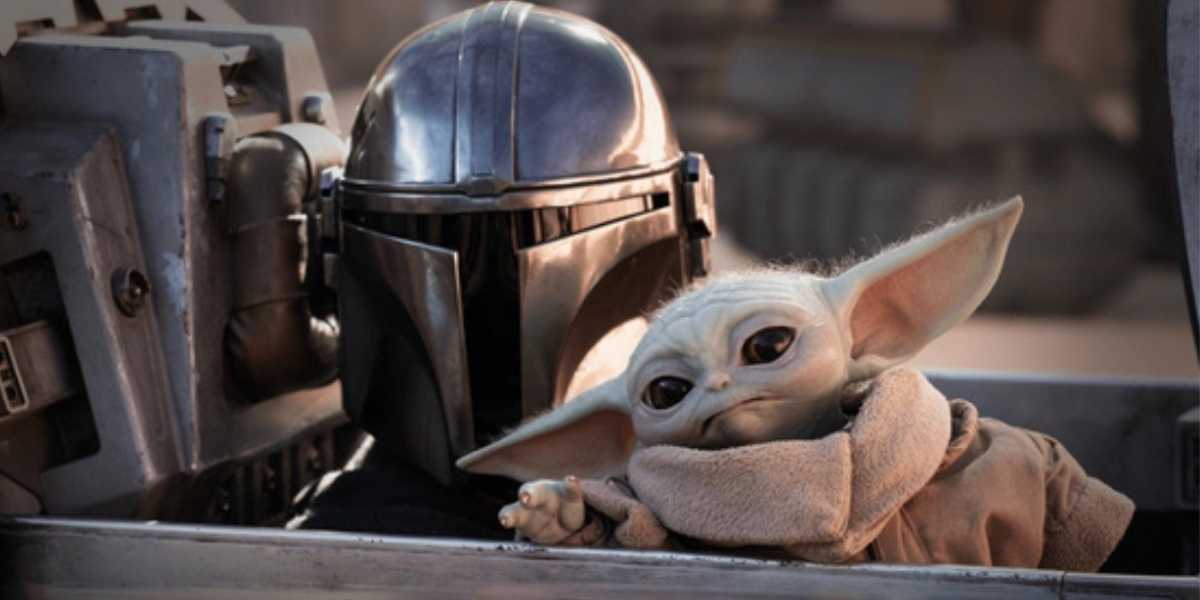
The 2023 SAG-AFTRA and WGA strikes brought Hollywood to a standstill for months. When the strikes ended and the industry returned to work, the calculus at Lucasfilm had changed. The studio — responding both to external pressure and to a genuine reassessment of the Disney+ Star Wars model — opted against reviving the serialized Season 4 format altogether. Showrunner Jon Favreau, working with the existing creative material, rebuilt the story as a theatrical film instead.
Favreau eventually called Coyne personally. Whatever the original Season 4 arc had been, there was a new version of it now — and Coyne's character, named officially as Janu Coin, a Shakari crimelord commanding a criminal empire and gladiator arena, was central to it.
“Then I heard the show got canceled, and so I just went, ‘Okay, I'll pack my bags, and leave LA.' And then I heard I was going to be part of the movie, and then I heard I was going to be seriously part of the movie, you know, significantly,” Coyne said. “And then, Jon Favreau called me up and interviewed me, and talked to me about what he plans to do with the character, and I thought, ‘Okay, bring it on.'”

Coyne has described his reimagined character as grounded and practical rather than theatrical — the kind of villain built for a wide theatrical audience rather than the deeply invested streaming subscriber who tracked every episode of the Mando-Verse. That distinction matters.
The film Favreau ultimately made needed to function for a moviegoer who had never watched Ahsoka or followed the long build toward Grand Admiral Thrawn's return. The layered, reference-heavy storytelling that characterized the Disney+ era had to be reworked into something that could stand on its own in a multiplex.
How much of what was originally planned for Season 4 survived into the film — including the threads that Favreau confirmed were intended to connect more directly with Ahsoka and Lars Mikkelsen's Thrawn — remains the kind of question only a side-by-side comparison of two projects, one of which doesn't exist, could ever fully answer.

What Lucasfilm has been clearer about is the forward strategy. The Mandalorian and Grogu is the first theatrical Star Wars release since 2019, and it won't be the last. Shawn Levy is directing Star Wars: Starfighter for 2027.
Dave Filoni, now co-leading Lucasfilm alongside Lynwen Brennan, is shepherding Ahsoka Season 2 to Disney+ in between. The studio that once built its future around interconnected streaming series — The Book of Boba Fett, Obi-Wan Kenobi, Ahsoka, The Acolyte, Skeleton Crew — is reorienting around theatrical releases as its primary output.
The Acolyte‘s cancelation after one season and Skeleton Crew‘s unresolved renewal status have fed a real unease among the audience that invested most deeply in the streaming era. Filoni's response to fan concern has been characteristically measured: “Everything works as planned. Like a Jedi, you must keep your mind in the here and now.” It is, depending on how you read it, either a promise or a redirect.

The Mandalorian and Grogu opened to $165 million globally.
How do you feel about the state of The Mandalorian franchise? Let us know in the comments down below!